.webp)

"Full mouth rehabilitation" is a phrase that many patients encounter during dental research but rarely have clearly explained to them. This article explains exactly what it means, who it is for, and what the process realistically looks like — from first consultation to final result.
The Simplest Definition
Full mouth rehabilitation is a coordinated, specialist-led programme of dental treatment that addresses the structure, function, and aesthetics of all teeth and the supporting tissues — jaw joints, gums, and bone — in a single planned process.
It is not a single procedure. It is a treatment plan that sequences multiple procedures — possibly over 6–18 months — with a defined clinical goal: a mouth that functions correctly, is free of active disease, and looks its best.
Why "Full Mouth"?
Most dental treatment is isolated — a filling here, a crown there, an extraction when necessary. This approach works well when problems are limited and localised. But some patients have accumulated damage, disease, or loss across most or all of their teeth simultaneously. When problems are widespread enough that treating them piecemeal produces a fragmented, clinically suboptimal result, full mouth rehabilitation — a coordinated, whole-of-mouth approach — becomes the appropriate treatment philosophy.
What Kinds of Problems Does It Address?
- Severe tooth wear from grinding (bruxism) or acid erosion
- Multiple missing teeth across one or both arches
- Multiple failing restorations — old crowns, bridges, or large fillings
- Generalised gum disease with bone loss
- Bite problems (malocclusion) that have developed as a result of tooth loss, wear, or uncoordinated previous treatment
What Does the Process Look Like?
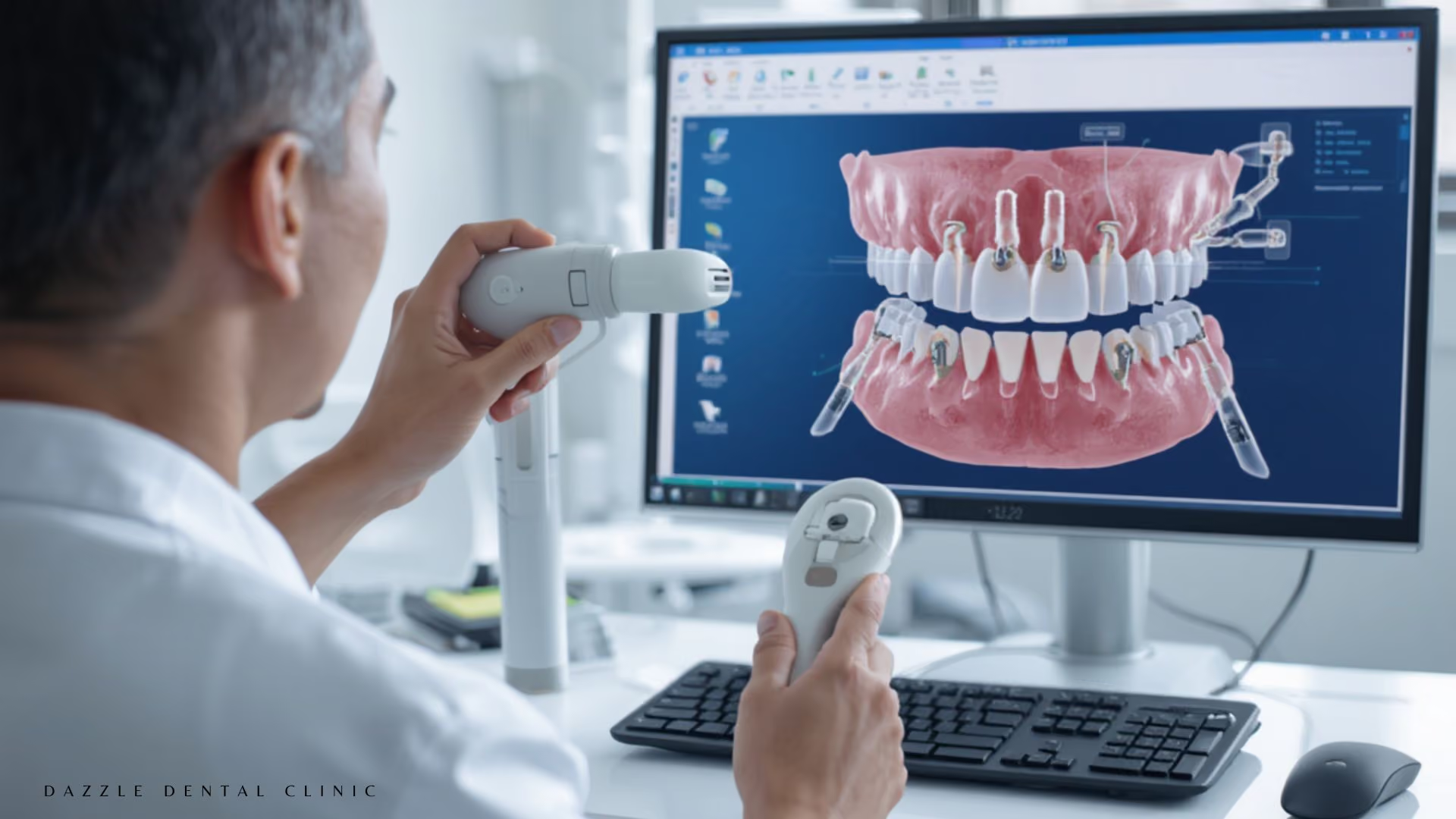
Step 1: Comprehensive Assessment. CBCT imaging, clinical examination, bite analysis, digital scans, photographs. Read about 3D imaging in dental treatment planning.
Step 2: Treatment Planning and Patient Review. A written, itemised treatment plan is produced before anything begins.
Step 3: Disease Stabilisation. Active decay, gum disease, or infection is treated first.
Step 4: Structural Work. Implants (placed with ClaroNav Navident computer-guided surgery), extractions, bone grafting where required, and major restorations. Where Fotona LiteWalker laser is used for gum management, this is coordinated within this phase.
Step 5: Final Restorations. Crowns, veneers, bridges, and implant-supported prostheses are fabricated by our in-house laboratory — staffed by over 50 specialist dental technicians — using CAD/CAM technology.
Step 6: Maintenance Programme. Six-monthly professional review, occlusal splint provision, and annual implant monitoring where applicable.
What Results Can a Patient Expect?
A well-executed full mouth rehabilitation delivers functional restoration, structural longevity, and aesthetic transformation simultaneously.
How Is It Different from Just Getting "A Lot of Dental Work"?
The difference is coordination and planning. Full mouth rehabilitation plans everything simultaneously. Every restoration is designed relative to the planned occlusion, the planned aesthetics, and the planned implant positions.
For a full clinical guide including cost, timeline, and candidacy, read our complete guide to full mouth rehabilitation in India. To understand whether you need rehabilitation or a smile makeover, read our comparison article. To begin your assessment, visit our full mouth rehabilitation treatment page.