.webp)

Periodontal regeneration is not a single procedure applied uniformly to gum disease. The bone defect type, the tooth involved, the patient's systemic health, and their lifestyle factors each influence which regenerative protocol is appropriate and what outcome is achievable. This article covers how Dazzle Dental Clinic approaches regenerative decision-making and what patients can expect from each protocol.
Our gum surgery service covers the full spectrum of periodontal procedures. Regenerative procedures specifically are detailed under our guided tissue regeneration treatment page.
Why Defect Morphology Determines Protocol
Not all bone loss around teeth is the same. The morphology of the defect — its shape, the number of remaining bone walls, its depth — determines the regenerative potential of the site. A three-wall intrabony defect (where bone walls remain on three sides of the defect) has high regenerative potential because the walls provide scaffolding for new attachment formation. A one-wall defect or a horizontal bone loss pattern has much lower regenerative potential because the scaffold structure is absent.
This is why defect-type assessment from CBCT imaging and clinical probing is essential before planning regeneration. Applying a regenerative protocol to a site that is not morphologically appropriate does not produce the published outcomes — it produces a failed procedure and an unwarranted cost. We explain this at the planning consultation.
Enamel Matrix Derivative (EMD): Emdogain Protocol
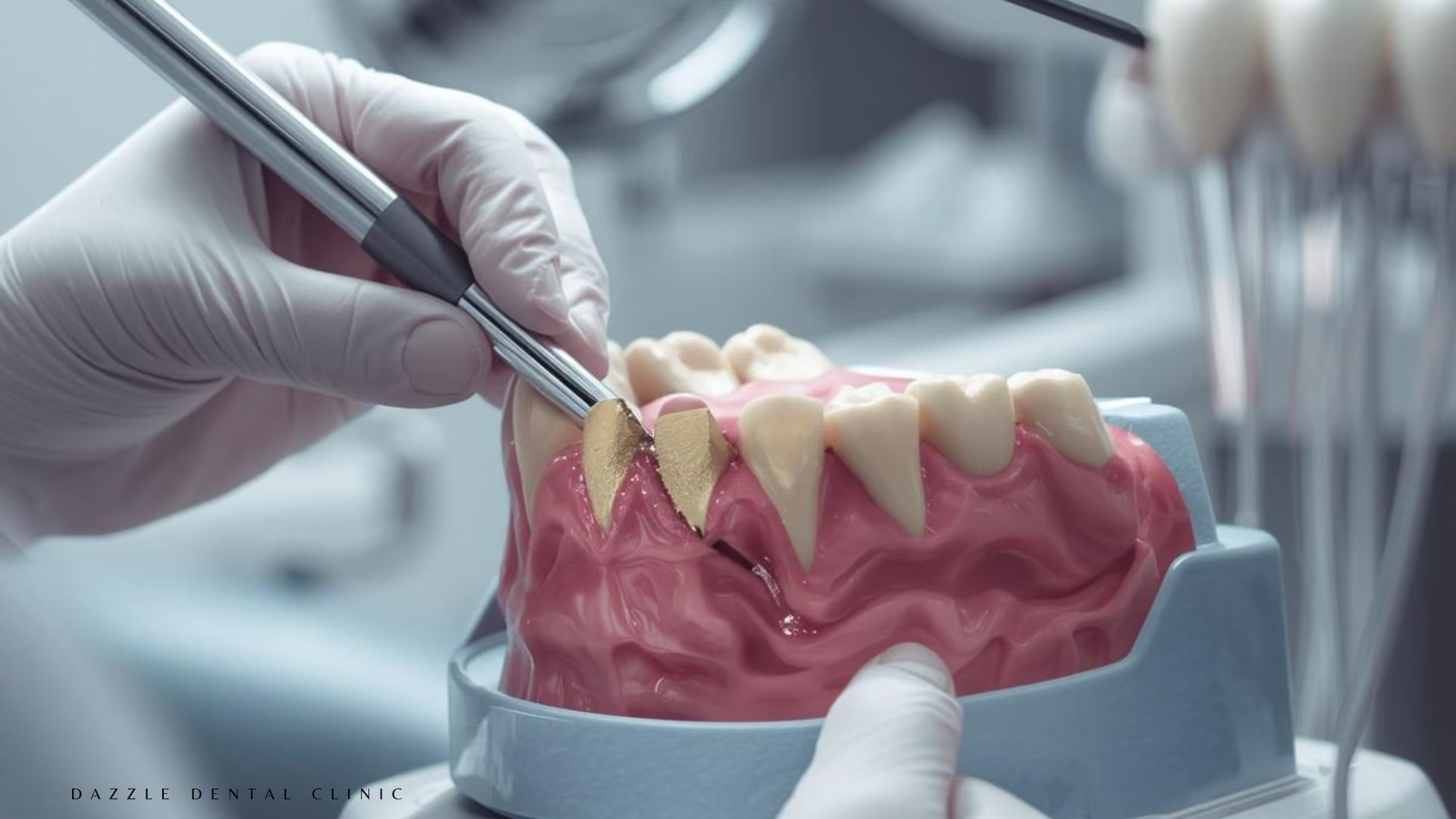
EMD is a protein extract derived from developing porcine tooth enamel. When applied to the debrided root surface during surgery, it recreates the developmental signalling environment that produced the periodontium in the first place — stimulating new cementum, periodontal ligament fibres, and alveolar bone. Published data: 2–4mm clinical attachment gain in three-wall intrabony defects over 12 months. At Dazzle, EMD is used for contained intrabony defects of adequate depth where the remaining bone wall anatomy supports this outcome.
Guided Tissue Regeneration (GTR) with Membrane
GTR uses a physical barrier membrane placed over the bone defect to exclude faster-proliferating epithelial cells from the healing space, allowing the slower-growing periodontal progenitor cells to populate and regenerate attachment. The membrane type — resorbable (collagen) or non-resorbable (PTFE) — is selected based on defect depth and anatomy. See our GTR membrane guide for technical detail. GTR is used at Dazzle for defects with adequate anatomy where cell exclusion is the primary requirement.
Bone Grafting
Bone graft material — autogenous, allograft, xenograft, or synthetic — provides the scaffold volume that supports membrane-covered regeneration and provides osteoconductive matrix for new bone formation. The graft type is selected based on the defect size and the patient's medical status. For large intrabony defects, a combination of EMD + bone graft + membrane produces the most comprehensive regenerative environment.
Patient Factors That Modify Outcomes
Smoking is the most clinically significant modifiable factor: regenerative procedures in smokers show 30–50% reduced clinical attachment gain compared to non-smokers in published comparisons. Diabetes (poorly controlled) and immunosuppression similarly reduce outcomes. We discuss the specific impact on your case before proceeding. Oral hygiene compliance post-surgery is the other critical factor — regenerated attachment does not survive in an uncontrolled bacterial environment.
FAQs
Q1: How do I know what type of bone defect I have?
Defect type is determined clinically and radiographically at your consultation appointment. We explain the findings specifically, including which defect type you have at each site and what the treatment options are for that morphology.
Q2: Can I have regeneration if I'm a smoker?
Yes, but outcomes are significantly reduced. We discuss the specific reduction in expected attachment gain with smokers before proceeding. If smoking cessation is achievable before surgery, a 3-month cessation period significantly improves the regenerative environment.
Q3: How long does regenerative surgery take?
Per-quadrant: 45–75 minutes under local anaesthesia. Cases involving multiple defect sites in the same quadrant may take longer. The appointment time includes the surgical procedure and suturing. Post-operative instructions are given at the end of the appointment.
Q4: When will I see results?
Clinical improvement — reduced probing depths, firmer tissue — is measurable at 3 months post-surgery. Radiographic bone fill is assessed at 12 months post-surgery, as bone formation in the healed defect continues over this period. Full assessment of the regenerative outcome is at the 12-month review.
Q4: Is there a maximum number of teeth that can be regenerated at one time?
Technically no, but surgical complexity and recovery manageability limit how many quadrants are typically treated in a single procedure. At Dazzle, we sequence multi-site cases for patient comfort, typically treating one or two quadrants per appointment.