


The visible result of a dental restoration, a crown, veneer, implant crown, or full-arch bridge, depends substantially on the tissue foundation it sits on. Gum margins that are uneven, excess gingival display that alters tooth proportions, inadequate bone volume at an implant site, or a bone defect that prevents a natural emergence profile: these are tissue problems that restorations alone cannot correct. At Dazzle Dental Clinic, soft and hard tissue sculpting is part of the pre-restorative planning process for appropriate cases. Our gum surgery and implant treatment pages provide an overview of how these procedures integrate at Dazzle.
Soft Tissue: What Can Be Reshaped
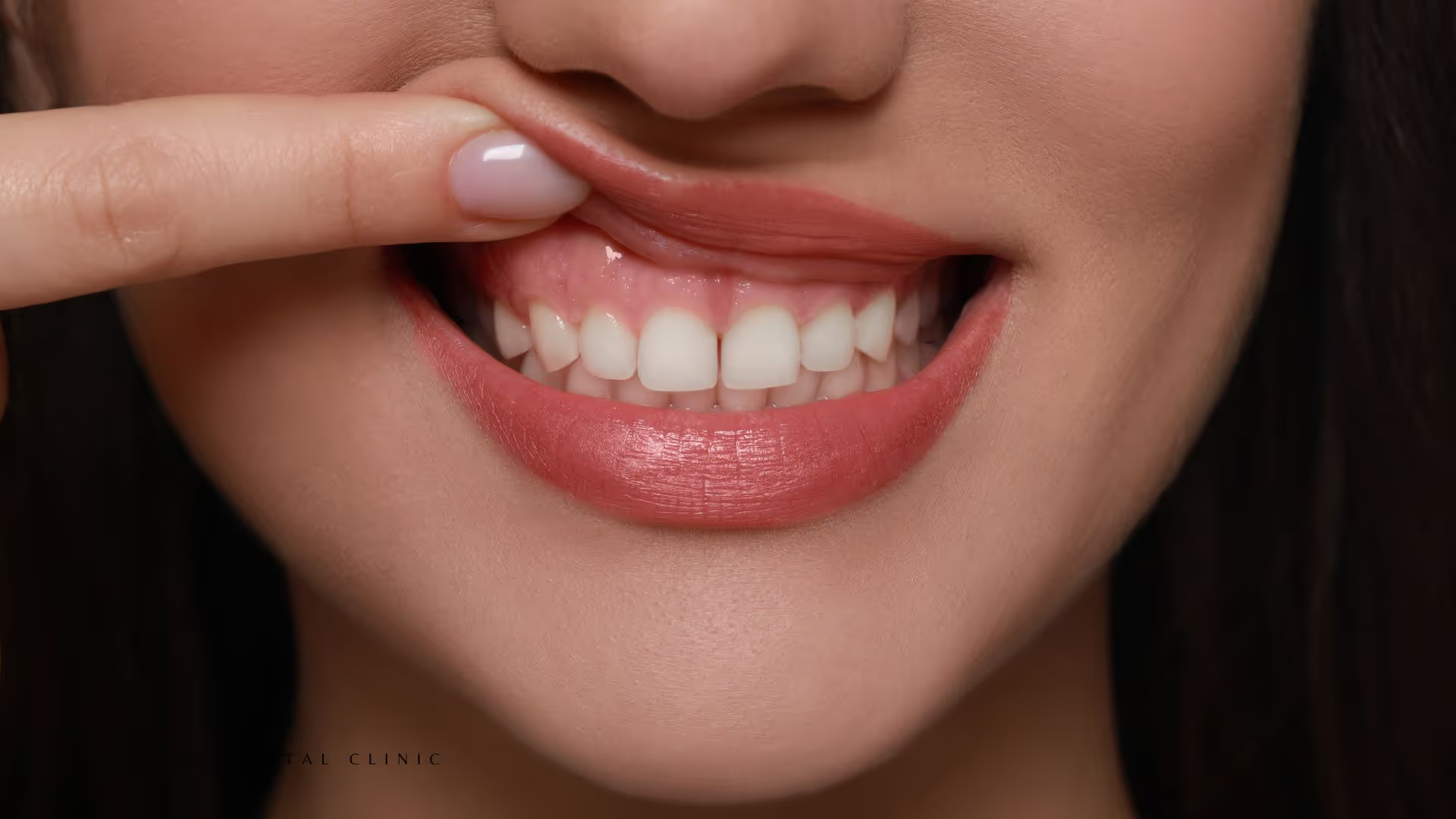
Gingival margin correction: The gum level sets the visible length of the crown. An implant crown placed on an implant with inadequate gum support will show the implant neck; a crown placed on a natural tooth with overgrown gum will look short. Laser gum contouring, using the Fotona Er:YAG at Dazzle, corrects gum levels around natural teeth with no sutures, haemostasis during the procedure, and minimal recovery time. Healing: 2–4 weeks before final restorations are placed. For the broader context of gum procedures, see our crown lengthening article.
Papilla management: The gum triangles between adjacent teeth (papillae) are the most aesthetically sensitive gum structures. Loss of papilla creates dark triangles between teeth that are immediately visible on smiling. Papilla reconstruction, using modified flap techniques and connective tissue grafts under magnification, can partially or fully restore papilla in selected cases.
Connective tissue grafting for peri-implant volume: The gum volume around an implant crown determines whether it transitions naturally from the implant to the visible crown. Where the gum volume is inadequate, a connective tissue graft from the palate adds tissue volume, corrects the emergence profile, and prevents the grey shadow that thin tissue over a metal implant creates. Performed before the final implant crown is delivered.
Hard Tissue: What Bone Sculpting Achieves
Bone grafting for ridge augmentation: Where the alveolar ridge has resorbed after tooth loss, implant placement in the correct three-dimensional position is limited by the available bone. Ridge augmentation with particulate bone graft and a membrane creates the bone width and height needed for the implant to be placed in the prosthetically correct position. This is distinct from sinus lifting: ridge augmentation addresses the outer surface of the ridge.
Crown lengthening (osseous): Where teeth are short due to deep gum margins with bone below, removing bone below the gum margin (osseous crown lengthening) creates the biological width for a restorative margin and exposes tooth structure that can be prepared for a crown. Without osseous crown lengthening in these cases, crown margins violate biological width and produce inflammation and failure. See our PRF and sinus lift guide for how PRF integrates with bone procedures.
The Sequence
Tissue modifications precede restorations. Gum contouring: 2–4 weeks healing before veneer preparation. Crown lengthening (soft tissue only): 2–4 weeks. Crown lengthening (with osseous surgery): 6–8 weeks. Connective tissue grafting at implant site: 4–6 weeks before final implant crown delivery. This sequencing is built into the treatment plan at the planning stage, not discovered mid-treatment.
FAQs
Q1: Can gum recontouring be done at the same appointment as veneer preparation?
Laser gum contouring and veneer preparation on the same day is possible for minor recontouring. The gum level heals within 2–4 weeks and the veneer is placed after. Significant osseous crown lengthening and veneer preparation cannot be done simultaneously. The crown lengthening must heal before preparation.
Q2: Is connective tissue grafting painful?
The donor site (palate) produces the majority of post-operative discomfort. This is manageable with NSAIDs and typically settles within 5–7 days. The recipient site (around the implant) produces less discomfort.
Q3: Will tissue procedures affect my other teeth?
Tissue procedures are performed at specific sites without affecting adjacent teeth that are not being treated. Laser gum contouring affects only the targeted gum margin. Grafting affects only the graft recipient site.
Q4: How long is the recovery after crown lengthening?
Soft tissue healing occurs over 2–4 weeks. Final tissue maturation and marginal stabilisation takes 6–8 weeks, which is why final crowns or veneers are not placed until this period has passed.


.avif)
