


In brief: A sealant is a thin coating flowed into the grooves of a healthy back tooth to stop decay starting. A pit filling (also called a preventive resin restoration) is used when early decay has already begun in a groove: the decay is removed, the spot filled and the rest of the groove sealed. Which one you need depends on what the dentist finds in the grooves.
Why the Grooves on Back Teeth Decay First
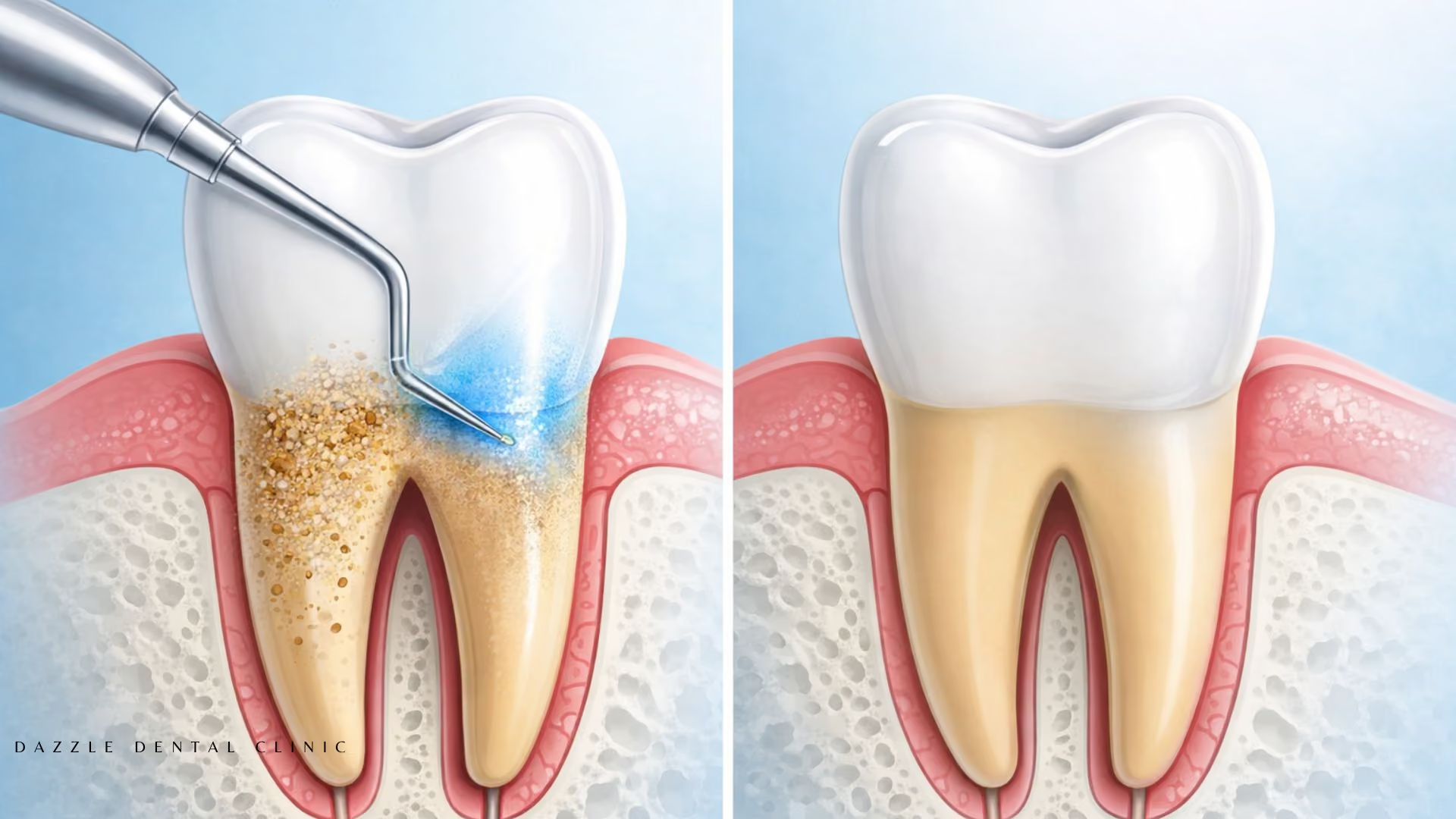
The chewing surfaces of molars and premolars have natural pits and fissures that help grind food. Many of these grooves are narrower than a single toothbrush bristle, so plaque and food at the bottom cannot be brushed out.
Bacteria in that plaque turn sugars into acid, and decay often starts at the base of the groove where the enamel is thin. Most cavities in children and teenagers begin on these chewing surfaces, which is why they get preventive attention first.
What a Sealant Is
A pit and fissure sealant is a flowable resin (or sometimes glass ionomer) applied into the grooves of a tooth with no cavity. It sets into a smooth, thin layer, so plaque has nowhere to hide and the surface is easy to brush.
Sealing needs no drilling and no injection. The steps are simple:
- The tooth is cleaned and the grooves checked for decay.
- The tooth is kept dry with cotton rolls or isolation, because saliva stops the sealant bonding.
- A mild acid gel is applied for a short time to roughen the enamel, then rinsed off and dried.
- The sealant is painted into the grooves and hardened with a curing light.
- The bite is checked and any high spot smoothed.
Each tooth takes a few minutes, so all four first molars can usually be sealed in one short visit. Children generally manage it well because there is no injection or drilling. Glass ionomer sealants are sometimes chosen for teeth that have only partly erupted and are hard to keep dry; they also release fluoride but tend to wear away sooner.
What a Pit Filling Is
When the dentist sees early decay in part of a groove, sealing alone is no longer the right choice. A pit filling, or preventive resin restoration (PRR), removes only the decayed enamel and dentine in that spot with a fine bur or air abrasion.
The small cavity is filled with composite resin or glass ionomer, and the remaining healthy grooves are sealed in the same sitting. This keeps the filling very small compared with a conventional filling that cuts out the whole groove pattern.
Shallow pit fillings often need no anaesthetic, and the tooth can be used for chewing as soon as the material is set. Deeper ones are done with local anaesthetic. If the decay turns out to be larger, it is treated as a standard Class I filling instead.
Sealant or Pit Filling: How the Choice Is Made
- Sealant: healthy grooves that are deep, sticky or stained but not decayed, especially in a child or a person with a high cavity rate.
- Pit filling: a groove with early decay that has gone into the enamel or just into the dentine.
- Conventional filling: decay that spreads under the groove or into the dentine more widely. See Class I and Class II fillings for how these are treated.
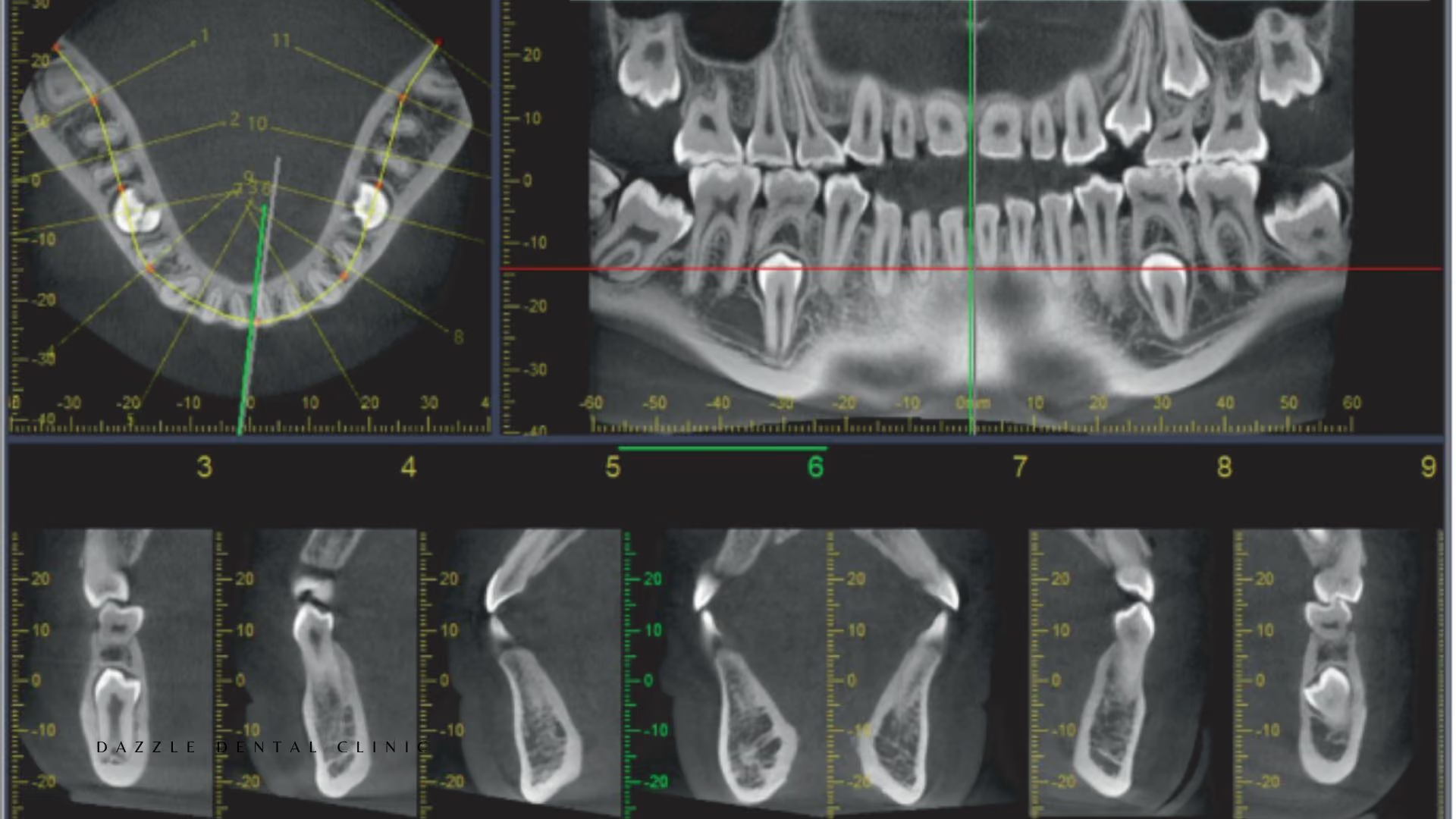
Staining alone does not always mean decay. The dentist uses a close visual check on a clean, dry tooth and, where needed, bitewing X-rays. Shallow, very early lesions in enamel can sometimes be sealed over, because a sealant cuts off the bacteria's food supply and the lesion usually stops progressing.
Why Treating Groove Decay Early Matters
Decay in a groove starts small but spreads sideways once it reaches the softer dentine underneath, often while the surface still looks almost intact. Caught at the enamel stage, it can be handled with a sealant or a pit filling. Left alone, it usually needs a full filling, and a deep cavity can reach the nerve and need a root canal and a crown.
Early treatment keeps more natural tooth, usually avoids sensitivity, and costs far less. At Dazzle, composite fillings start from ₹1,000; the exact fee depends on size and is confirmed after the examination. All our fillings are mercury-free.
Who Benefits
Children: the first permanent molars come through at around age 6 and the second molars at around age 12. Sealing them soon after they erupt protects them during the years when cavity risk is highest. Deep-grooved milk molars are sometimes sealed in children with a high decay rate.
Teenagers: second molars and premolars are the focus, especially for those with braces, sweet snacking or a history of fillings.
Adults: sealants and pit fillings are not only for children. Adults with deep healthy grooves, dry mouth from medicines, a high recent cavity rate, or early staining in a groove can benefit too.
How Long They Last
Resin sealants commonly stay in place for several years and many last much longer, but they can wear or partly chip off under chewing. A worn sealant is not harmful; it simply needs topping up. Glass ionomer sealants usually wear away sooner.
Pit fillings behave like small composite fillings. Because they are small and away from the main chewing contacts, they often hold up well. Both should be checked at each routine visit.
Checks and Aftercare
You can eat and drink normally straight after a sealant. The bite may feel slightly different for a day.
- Have sealants and pit fillings checked at every dental check-up, and resealed if any part has worn.
- Keep brushing twice a day with fluoride toothpaste and clean between teeth daily. Sealants protect the chewing grooves only, not the spaces between teeth.
- Limit sticky sweets and frequent sugary drinks.
- Avoid chewing ice or hard objects, which can chip the sealant.
If a groove does decay later, it is usually picked up early at a review and fixed with a small tooth-coloured filling (see our fees page for current prices).
Want your child's or your own back teeth checked for sealants? Book a Consult at our Bandra West or Kemps Corner clinic.

.avif)
