.webp)

Digital planning for All-on-X implants is a process, not a single technology. It begins with data acquisition, passes through virtual planning, produces a physical surgical guide, and ends with execution that mirrors the plan in the patient’s jaw. Each step has specific tools and specific quality requirements. This article covers what happens at each stage and what patients should understand about the process at Dazzle Dental Clinic.
Step 1: CBCT Data Acquisition
The process begins with a CBCT scan — a three-dimensional X-ray that creates a volumetric dataset of the patient’s jaw. Unlike a panoramic radiograph, which produces a single flat image, CBCT generates a full three-dimensional model of the bone, allowing measurement of bone width, height, and density at any point in the jaw.
For All-on-X planning, the CBCT reveals: the position of the maxillary sinus floors and any sinus pathology; the course of the inferior alveolar nerve and the location of the mental foramina; the bone density classification (Misch Type I–IV) at each proposed implant site; the alveolar ridge morphology; and any residual root fragments, pathology, or surgical history that would affect the plan.
For international patients with existing CBCT data from a previous consultation, we accept DICOM files for remote review and can produce a preliminary plan and cost estimate before travel is confirmed. Contact us to arrange this.
Step 2: Intraoral Scan and Data Integration
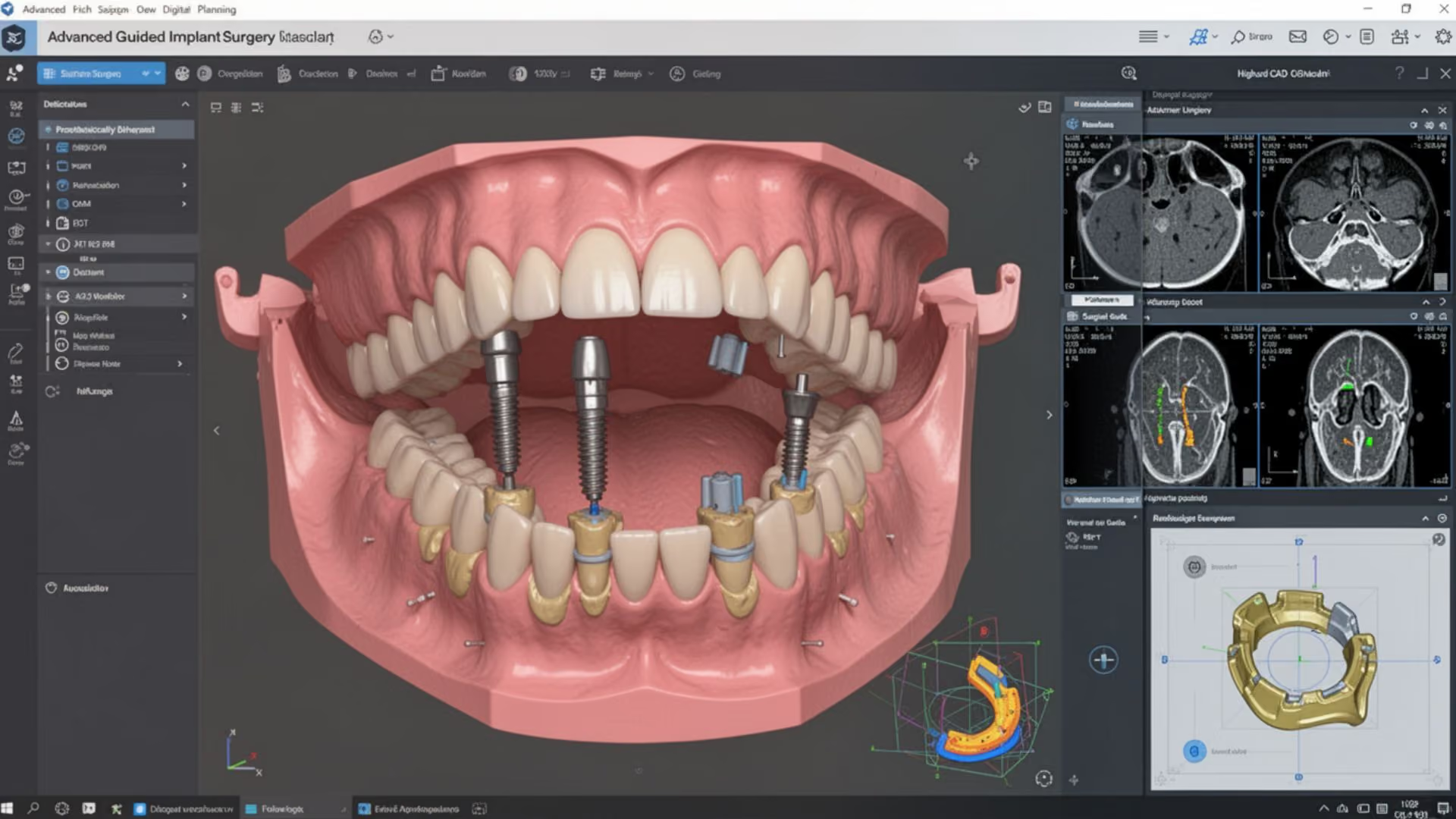
The CBCT bone dataset is combined with an intraoral scan of the patient’s existing teeth and gum. The intraoral scan provides the soft tissue and tooth position data that the CBCT cannot capture accurately (teeth appear distorted in CBCT due to metal artifacts). The two datasets are merged using software that aligns them by matching common anatomical landmarks.
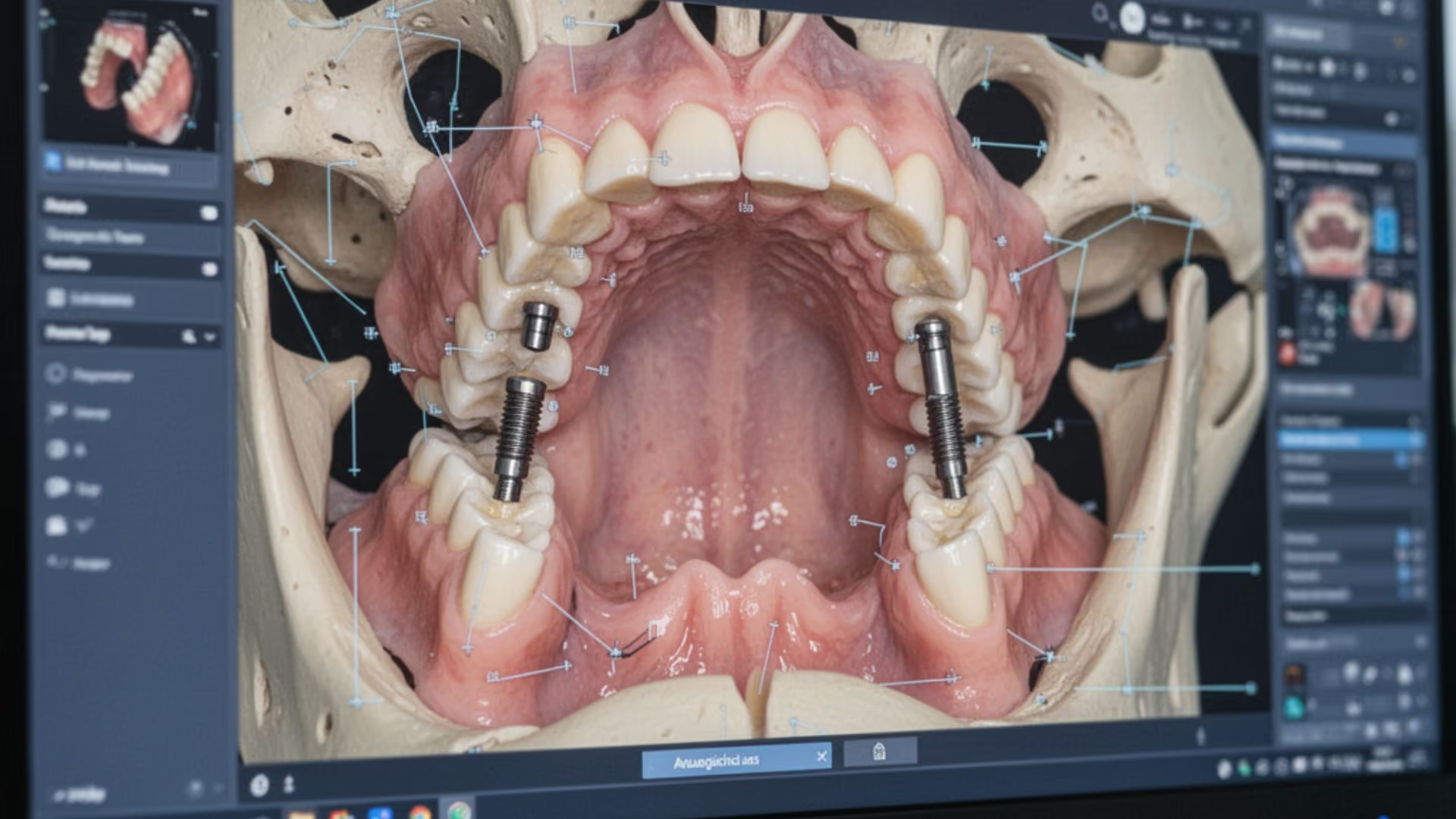
This merged dataset gives the planning team a complete virtual model: bone in three dimensions, teeth and gum in their correct positions, and all critical anatomical structures mapped.
Step 3: Virtual Implant Planning
Within the merged dataset, the planning team places virtual implants. For All-on-4, this means two anterior implants placed axially and two posterior implants placed at 30–45 degrees. Each implant position is optimised simultaneously for: adequate bone width and height at the apex; primary stability potential (bone density); antero-posterior spread (the mechanical determinant of full-arch bridge stability); safe clearance from the sinus, nerve, and nasal floor; and compatibility with the planned bridge emergence profile.
The prosthodontic team reviews the virtual plan to confirm that the implant positions support the intended bridge design — that the abutment emergence angles are compatible, that the screw access channels will be in accessible positions in the bridge, and that the cantilever length from the most posterior implant to the bridge terminus is within safe limits.
Step 4: Surgical Guide Fabrication
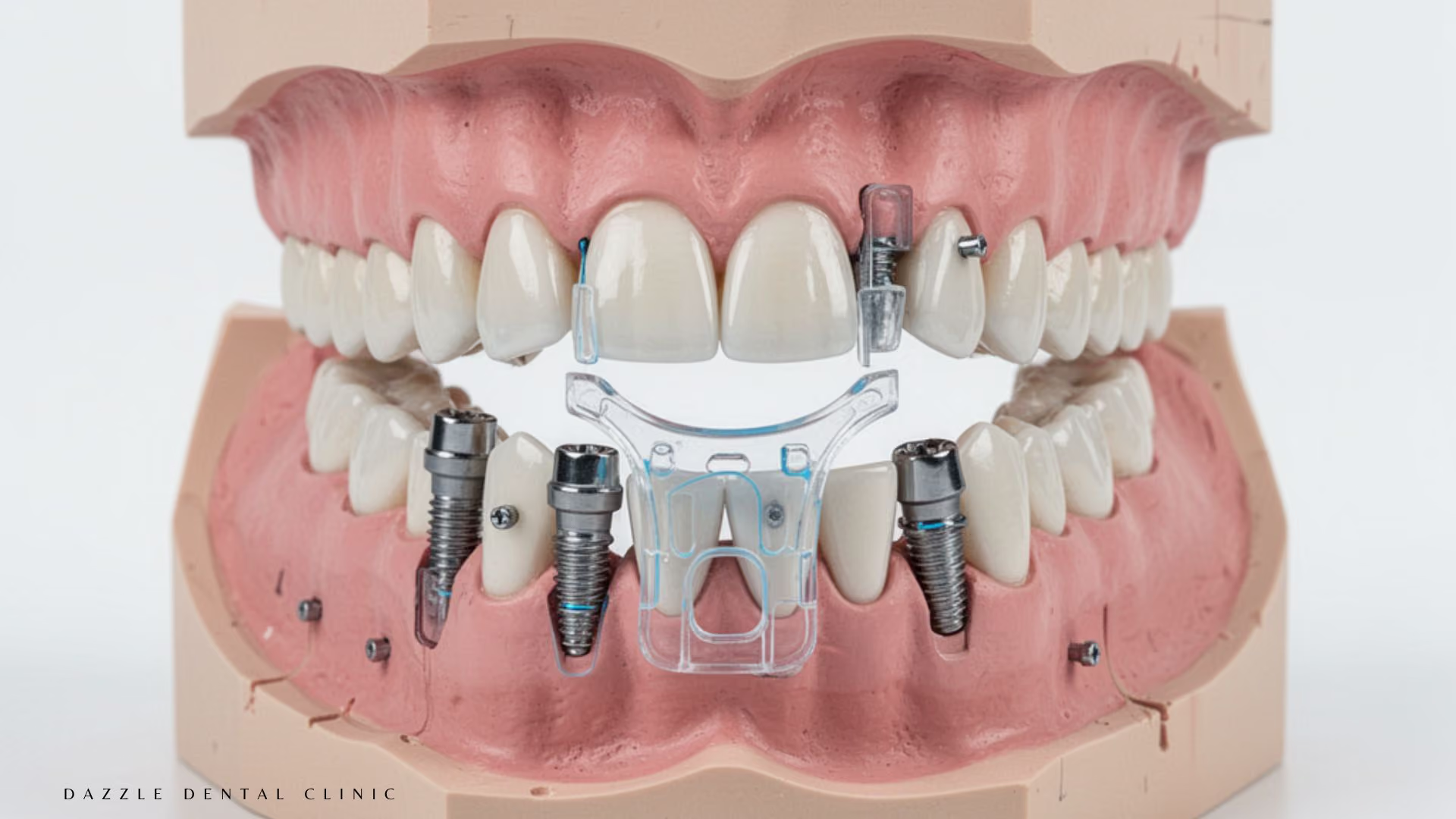
Once the virtual plan is finalised and approved, it is used to generate a surgical guide — a 3D-printed resin device containing metal sleeves that constrain the drill to the planned trajectory at each implant site. The guide is fabricated in our in-house digital laboratory, typically within 2–3 business days of plan approval.
The guide is tried in at the surgical appointment before surgery begins to confirm accurate seating. Ill-fitting guides — which would cause systematic placement error — are identified and replaced before any drilling begins.
Step 5: Surgical Execution and Intraoperative Confirmation
Drilling proceeds through the guide sleeves in the planned sequence. Insertion torque is measured at final implant seating and ISQ (Implant Stability Quotient) measured by resonance frequency analysis — these intraoperative measurements confirm whether primary stability meets the threshold for immediate loading. The plan anticipates immediate loading; the measurements confirm it is safe to proceed.
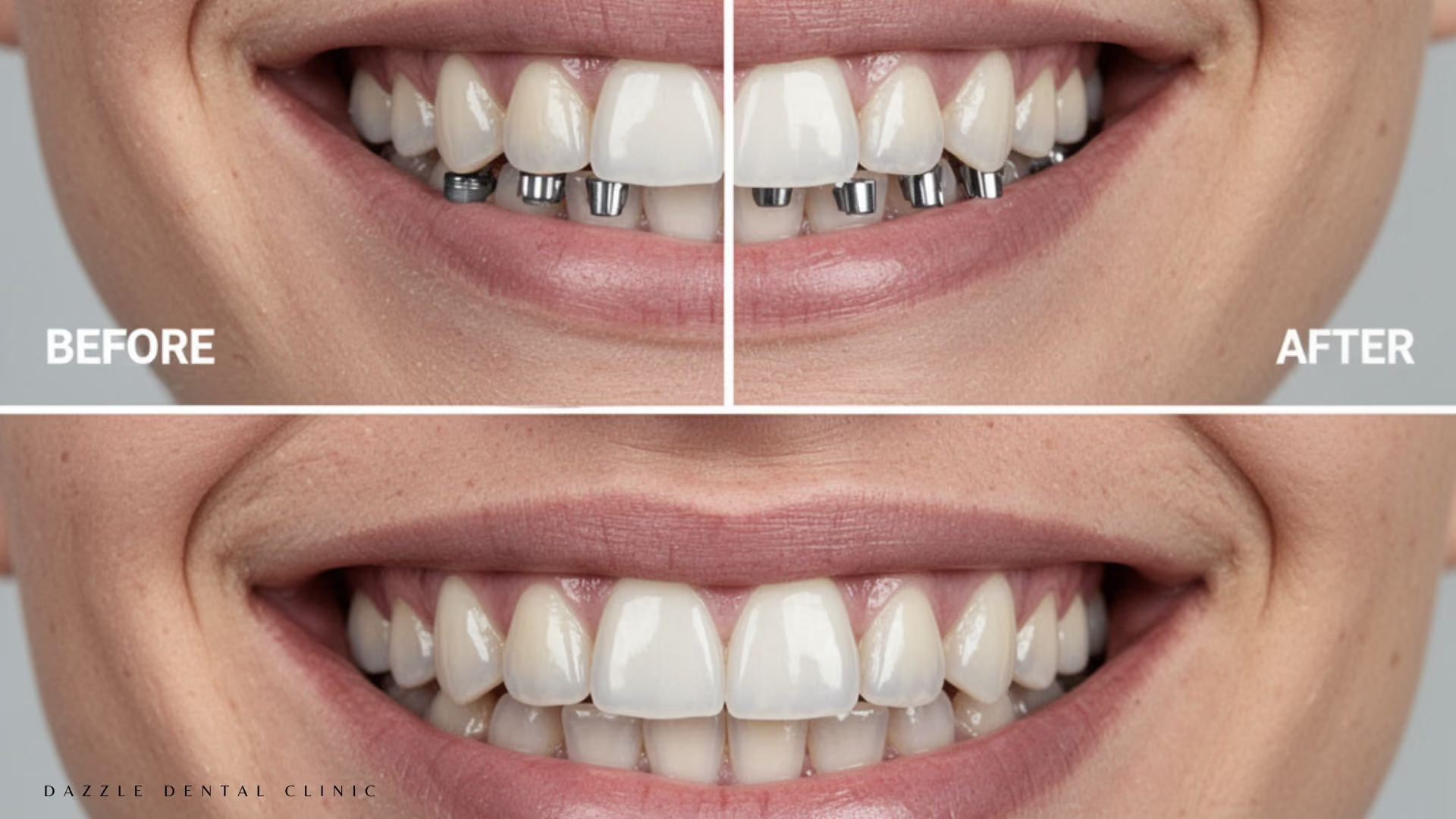
The provisional bridge, fabricated in advance based on the virtual plan, is tried in and adjusted to the implants at the surgical appointment. After bite verification and occlusal check, it is fixed to the abutments. The patient leaves with functional teeth.
Why This Matters for Outcomes
The planning process converts the All-on-X surgical appointment from an exploratory procedure — where the surgeon makes implant position decisions in real time based on what the bone looks like when the flap is opened — into an execution procedure, where a pre-approved plan is carried out with constrained accuracy. This reduces variability, reduces surgical time, and reduces the risk of anatomically significant placement errors that would compromise the prosthetic or the patient’s safety.
FAQs
Q1: How long does the planning phase take?
From CBCT acquisition to plan approval and guide fabrication is typically 7–10 business days. For international patients who send CBCT data remotely, the plan can be completed before arrival. The surgical appointment is then scheduled for execution rather than planning.
Q2: Can I be involved in reviewing the plan before surgery?
Yes. The treatment plan consultation includes review of the virtual plan and the planned bridge design with the patient. Patients see where their implants will be placed, what the bridge will look like, and what the expected functional and aesthetic outcome is. Feedback at this stage is incorporated before surgery is scheduled.
Q3: What happens if the plan needs to change on the day of surgery?
Plans are designed to anticipate anatomy based on CBCT data, which is highly accurate. Intraoperative deviations are uncommon but can occur. The surgeon has the clinical judgement to modify the plan when necessary. Minor position adjustments within the anatomical safety margins are made without stopping; significant deviations that would require a new guide are discussed with the patient before proceeding.
Q4: Does Dazzle use Simplant, coDiagnostiX, or another specific planning platform?
At Dazzle, planning software selection is matched to the implant system and case requirements. The specific platform is less important than the accuracy of the plan and the quality of the guide it produces. What matters to the patient is the clinical outcome — which is determined by the plan quality, guide accuracy, and surgical execution, not the brand of software.