.webp)

One of the most significant shifts in implant dentistry over the past decade is the move from "place and adapt" to "plan and execute." Pre-treatment digital simulation is the practical expression of this shift: every surgical decision is made, reviewed, and approved before the patient enters the operatory. Surprises during surgery are substantially reduced.
This is not a technology demonstration. It is a clinical protocol that directly affects patient safety and the predictability of outcomes for our All-on-4 implant cases.
What the Simulation Actually Involves
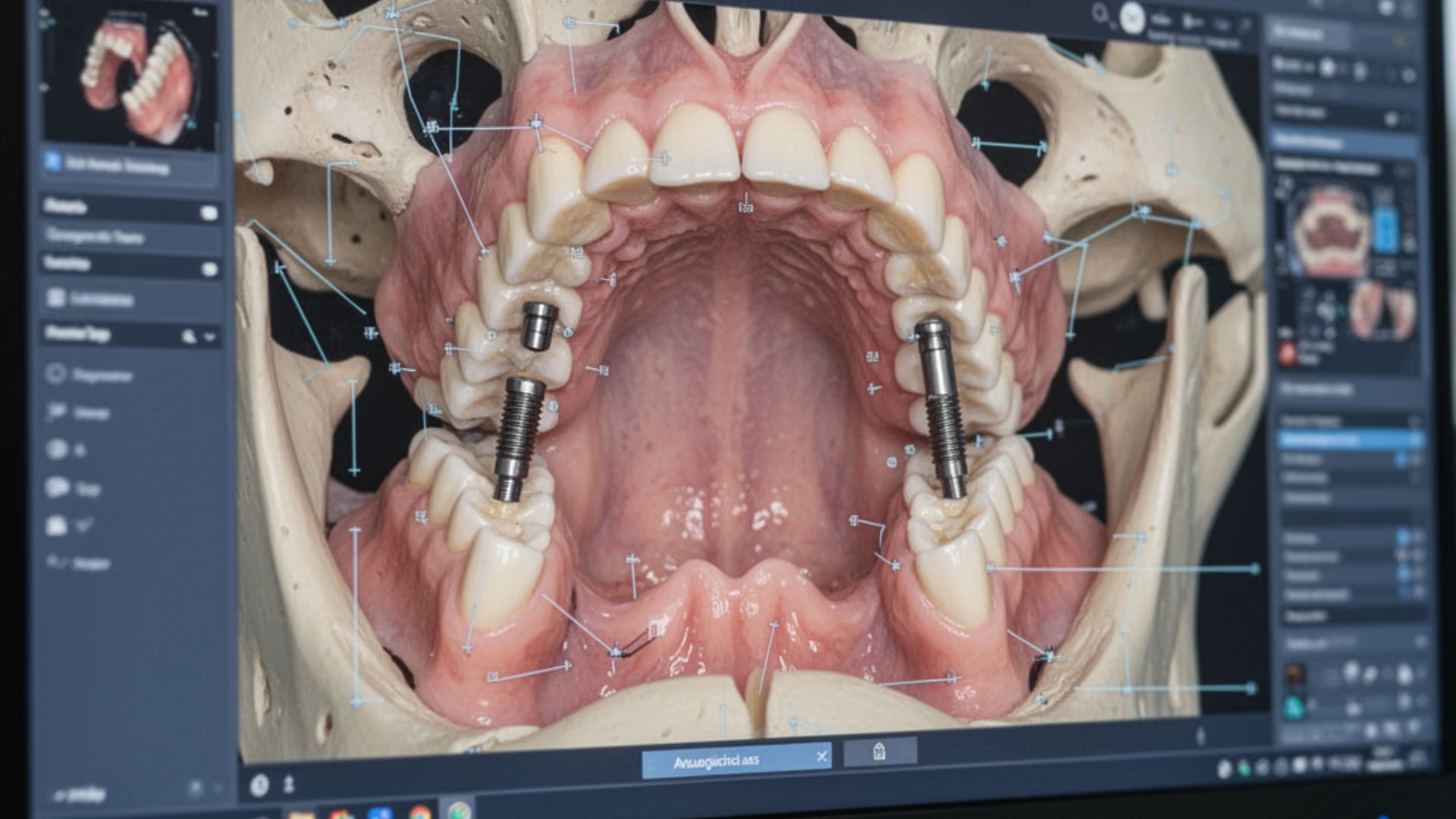
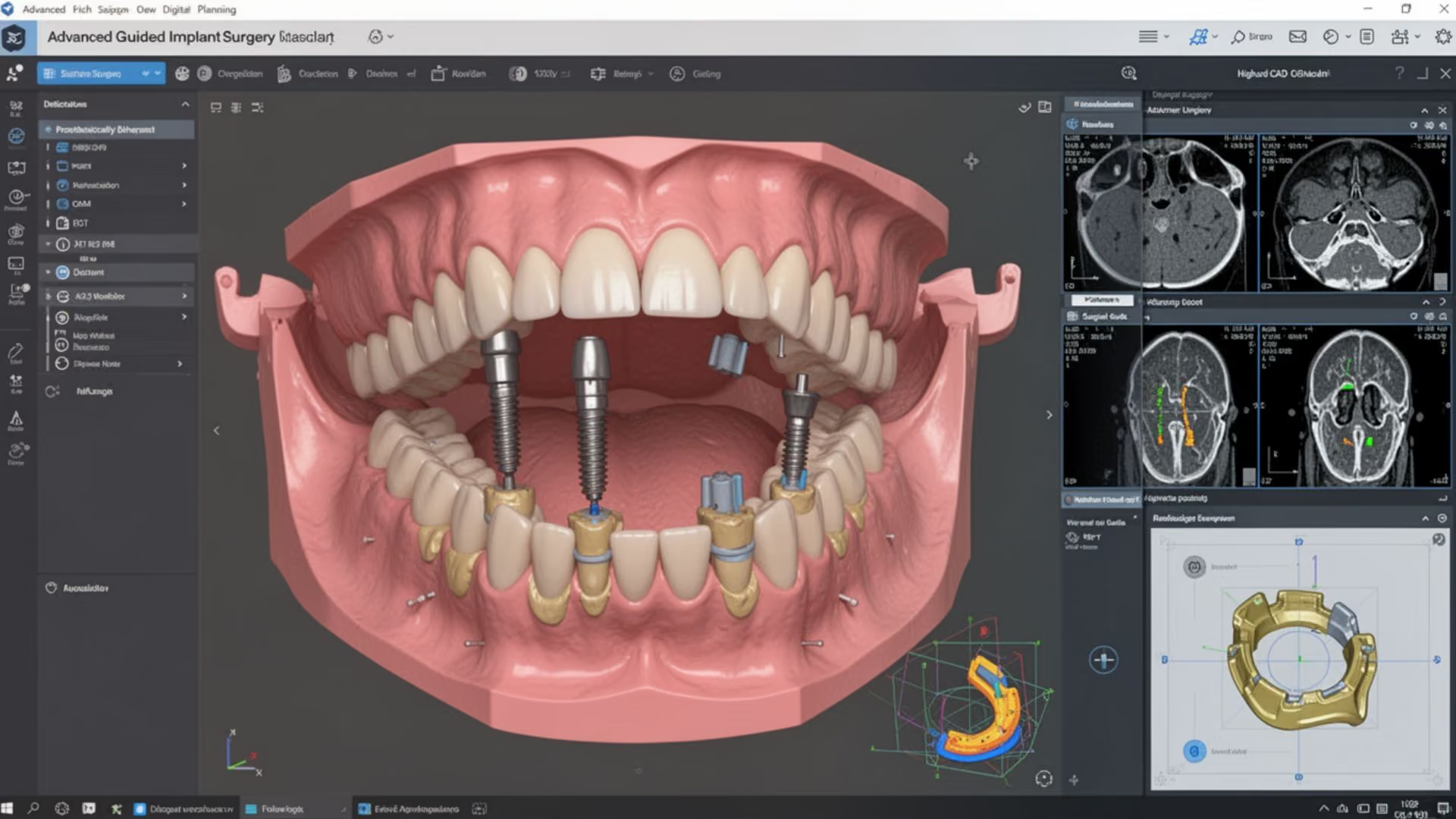
The simulation begins with a CBCT scan that creates a volumetric three-dimensional model of the patient's jaw: bone width, bone height, bone density, sinus anatomy, nerve positions, and any existing pathology. This dataset is imported into implant planning software. All imaging is captured through our advanced dental imaging service.
The surgical plan is created within this dataset: implant positions are placed virtually, with their size, angulation, and depth chosen to maximise bone engagement, achieve the antero-posterior spread required for prosthesis stability, and maintain safe distances from the inferior alveolar nerve, maxillary sinus, and nasal floor. Crucially, the virtual plan also incorporates prosthetic requirements — the implant positions are evaluated against the planned bridge design. This is the prosthetic-first principle in digital form.
The Surgical Guide
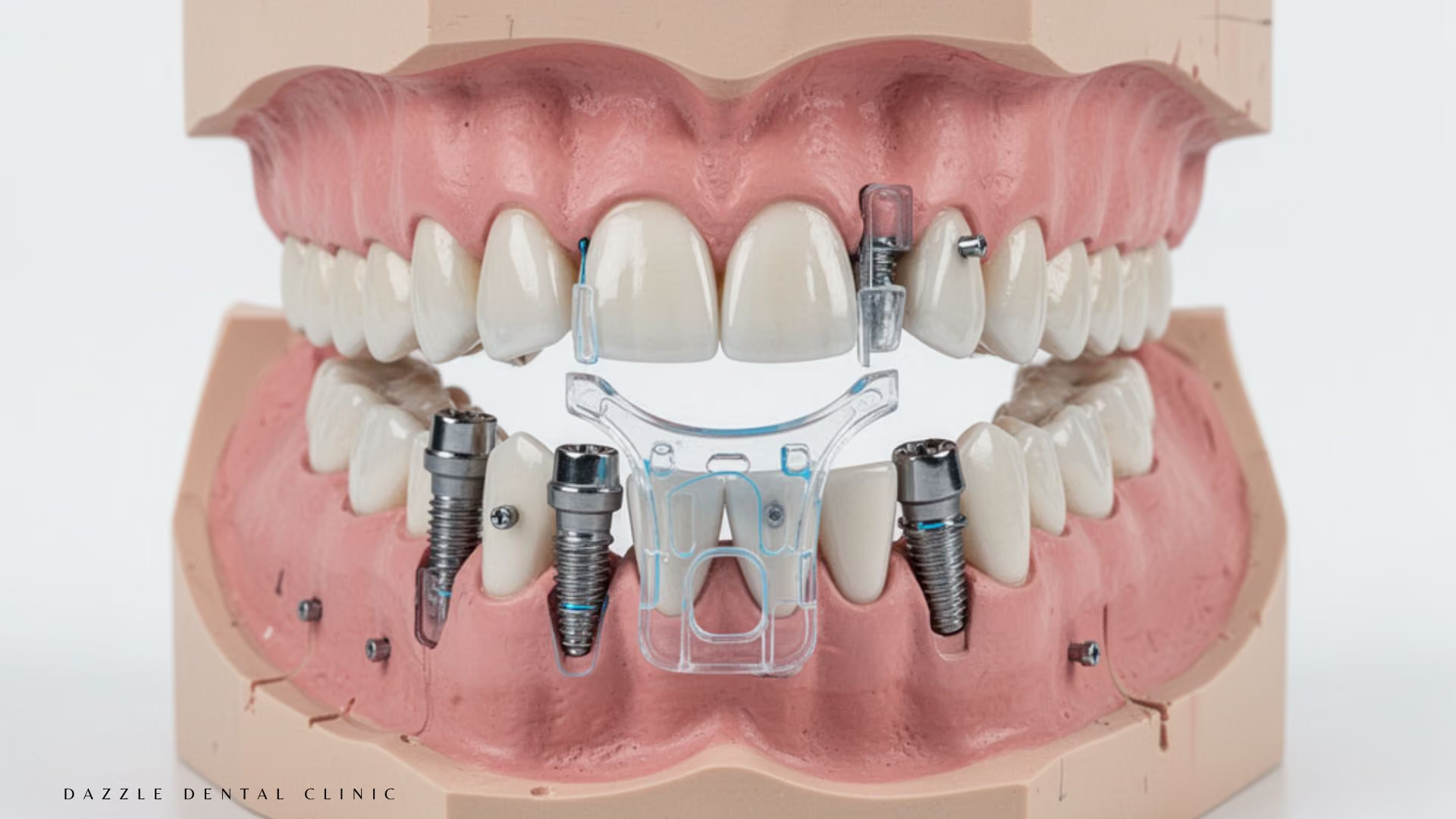
The virtual plan is translated into a physical surgical guide — a custom-fabricated device that fits over the patient's gum or remaining teeth and physically constrains the drill to the planned position, angulation, and depth. With a well-designed guide and careful seating technique, implant placement deviation from the virtual plan is typically under 1mm at the implant apex and under 2 degrees of angular deviation. For more on the full range of guided surgery options, see our guided implantology guide.
What Patients See Before Treatment
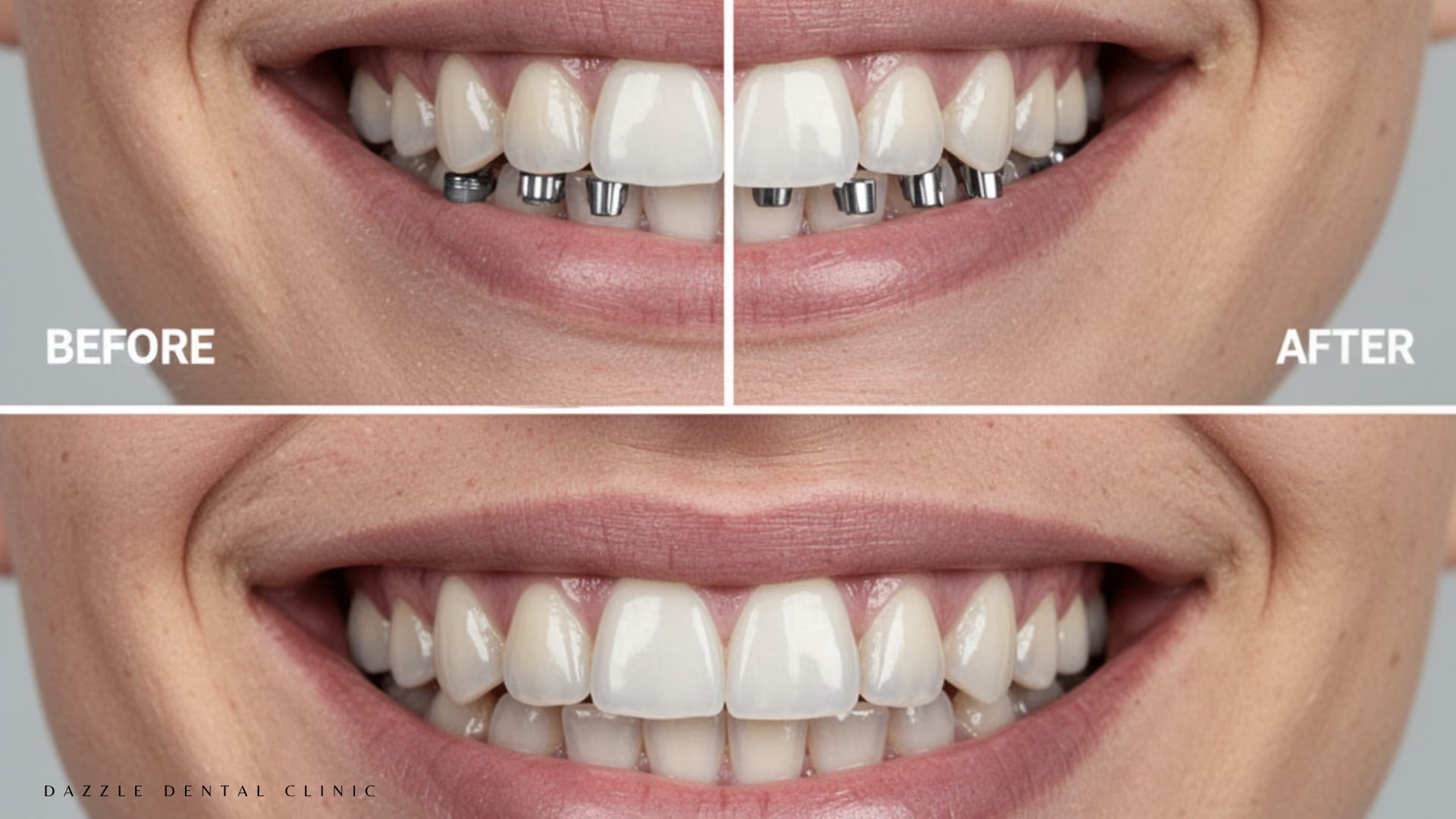
Alongside the surgical planning, Digital Smile Design (DSD) software integrates the patient's facial photographs and scan data to produce a visual simulation of the planned prosthetic outcome. This shows the patient the anticipated tooth positions, proportions, and shade before any treatment begins.
The DSD simulation is not a guarantee of the exact final result — it is a design proposal. Patient feedback at this stage is incorporated into the plan.
What This Changes for International Patients
For patients travelling from the UK, GCC, Australia, or Africa, pre-treatment digital planning changes the consultation structure. A substantial portion of the surgical decision-making can be completed remotely using a CBCT scan sent in advance. We review the anatomy, create a preliminary virtual surgical plan, and provide a treatment proposal and cost estimate before the patient boards a plane. Contact us with your existing CBCT (DICOM format) for a preliminary assessment.
FAQs
Q1: Is virtual planning the same as guided surgery?
Not exactly. Virtual planning is the planning phase: creating the surgical plan in a 3D digital dataset. Guided surgery is the execution phase: using a physical surgical guide derived from the plan to constrain the drill at surgery. Guided surgery requires virtual planning to produce the guide; virtual planning without a guide benefits diagnostics but does not constrain the surgery itself.
Q2: Can I see my planned smile before I agree to surgery?
Yes. The DSD simulation provides a visual preview of the planned prosthetic outcome integrated with your facial photographs. At Dazzle, this is offered for appropriate cases as part of the pre-treatment workflow. You review and provide feedback before any preparation of teeth or surgical procedures begins.
Q3: Does digital planning cost extra?
The CBCT scan, planning software, and surgical guide fabrication are included in the implant treatment plan at Dazzle. We do not separate these as optional add-ons, because they are integral to the clinical protocol.
Q4: What if my anatomy makes the plan change between planning and surgery?
The virtual plan is designed to anticipate anatomical variation based on the CBCT data. Intraoperative findings that require deviation from the plan are unusual in CBCT-planned cases but can occur — the surgeon has the clinical judgement to adapt in real time.