


In brief: All-on-4 and All-on-6 replace a full arch of missing or failing teeth with a fixed bridge held on four or six implants. The choice between them depends on your bone, jaw size and bite, which a CBCT scan shows. Most patients leave with fixed temporary teeth soon after surgery and get their final bridge once the implants have fused with the bone.
What All-on-4 and All-on-6 are
Both are full-arch treatments for the upper or lower jaw. Four or six implants are placed in the jawbone and a single fixed bridge of teeth is screwed onto them. You do not take it out at night, unlike a denture.
In All-on-4, the two front implants sit upright and the two back implants are tilted, often up to about 45 degrees. Tilting lets longer implants reach denser bone in front of the sinus (upper jaw) or the nerve canal (lower jaw), which is why many patients with moderate bone loss can be treated without a bone graft.
All-on-6 adds two more implants. The load is shared across more points, and the bridge can sometimes be made with less cantilever (the part of the bridge that extends behind the last implant). It needs enough bone along the arch to place six implants safely.
All-on-4 or All-on-6: how the choice is made
Neither option is better for everyone. The decision rests on what the scans and examination show:
- Bone volume and density: softer or thinner bone, common in the upper jaw, may favour more implants to spread the load.
- Arch size and shape: a large, wide arch may be better supported by six implants.
- Bite force: heavy biters and people who clench or grind put more stress on the bridge and the implants.
- Anatomy: the sinus position and the nerve canal limit where implants can go.
Where bone is too limited even for tilted implants, zygomatic or pterygoid implants anchored in the cheekbone or the back of the upper jaw are alternatives. See our zygomatic implants page for how these work.
All-on-4 vs All-on-6 at a glance
- Implants per arch: four in All-on-4; six in All-on-6, usually with the extra two in the middle of the arch.
- Bone needed: All-on-4 is designed to work around moderate bone loss at the back of the jaw. All-on-6 needs enough bone at six sites, and some cases need a graft or sinus lift first.
- Load sharing: six implants spread bite force over more points and can shorten the cantilever, which helps in wide arches and heavy biters.
- Back-up if an implant fails: with six implants, the bridge may still be supported while one implant is replaced. With four, losing an implant usually means the bridge has to be adapted or the implant replaced before full chewing resumes.
- Same-day teeth: both can carry a fixed temporary bridge soon after surgery when the implants are stable enough.
- Recovery: broadly similar, though six sites may mean slightly more swelling.
- Cost: All-on-6 costs more because of the two extra implants, parts and surgical time. All-on-4 starts from ₹3,00,000 per arch; an All-on-6 quote is case-specific and follows the CBCT scan.
Adding implants into bone that cannot hold them does not improve the result. If the scan shows that four well-placed implants can carry the bridge, six may add cost without adding benefit. Patients who travel from abroad and live far from follow-up care sometimes weigh the back-up argument for six more heavily, and that is a fair point to raise at consultation.
Questions to ask before you choose
- Is the recommendation based on a CBCT scan of my own bone?
- Which implant system will be used, and why for my case?
- Will the surgery be guided or freehand?
- Where is the final bridge made, and in what material?
- What is the plan if one implant does not integrate?
Who is a good candidate
Good candidates are adults who have lost most or all teeth in an arch, have teeth that cannot be saved because of advanced gum disease or decay, or struggle with a loose denture. There is no upper age limit. What matters is general health and bone, not birth year.
Your dentist will review your medical history before planning. Uncontrolled diabetes, heavy smoking, some bone medicines (such as bisphosphonates) and radiotherapy to the jaw raise the risk of healing problems and need to be discussed and, where possible, controlled first.
The treatment steps
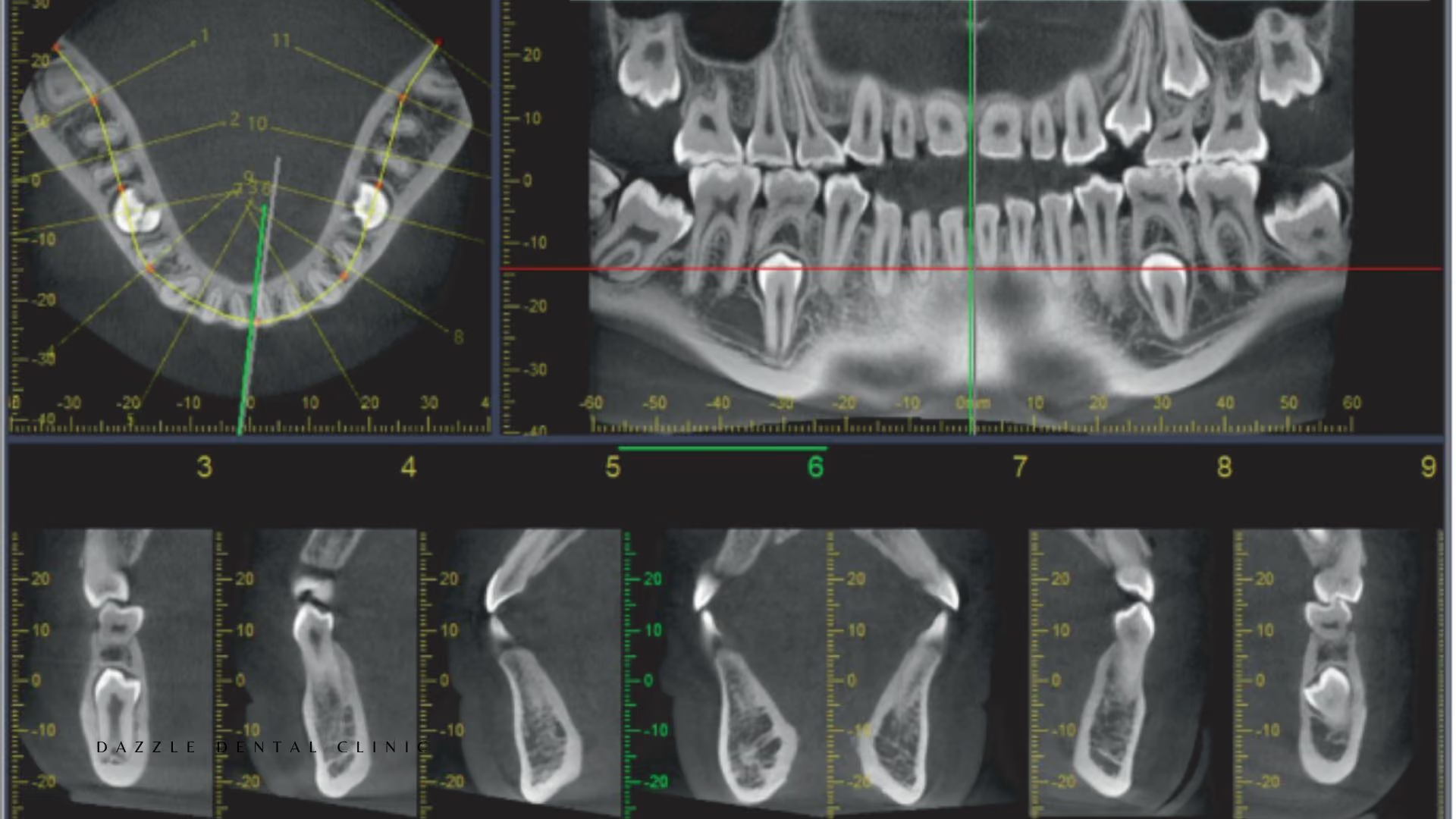
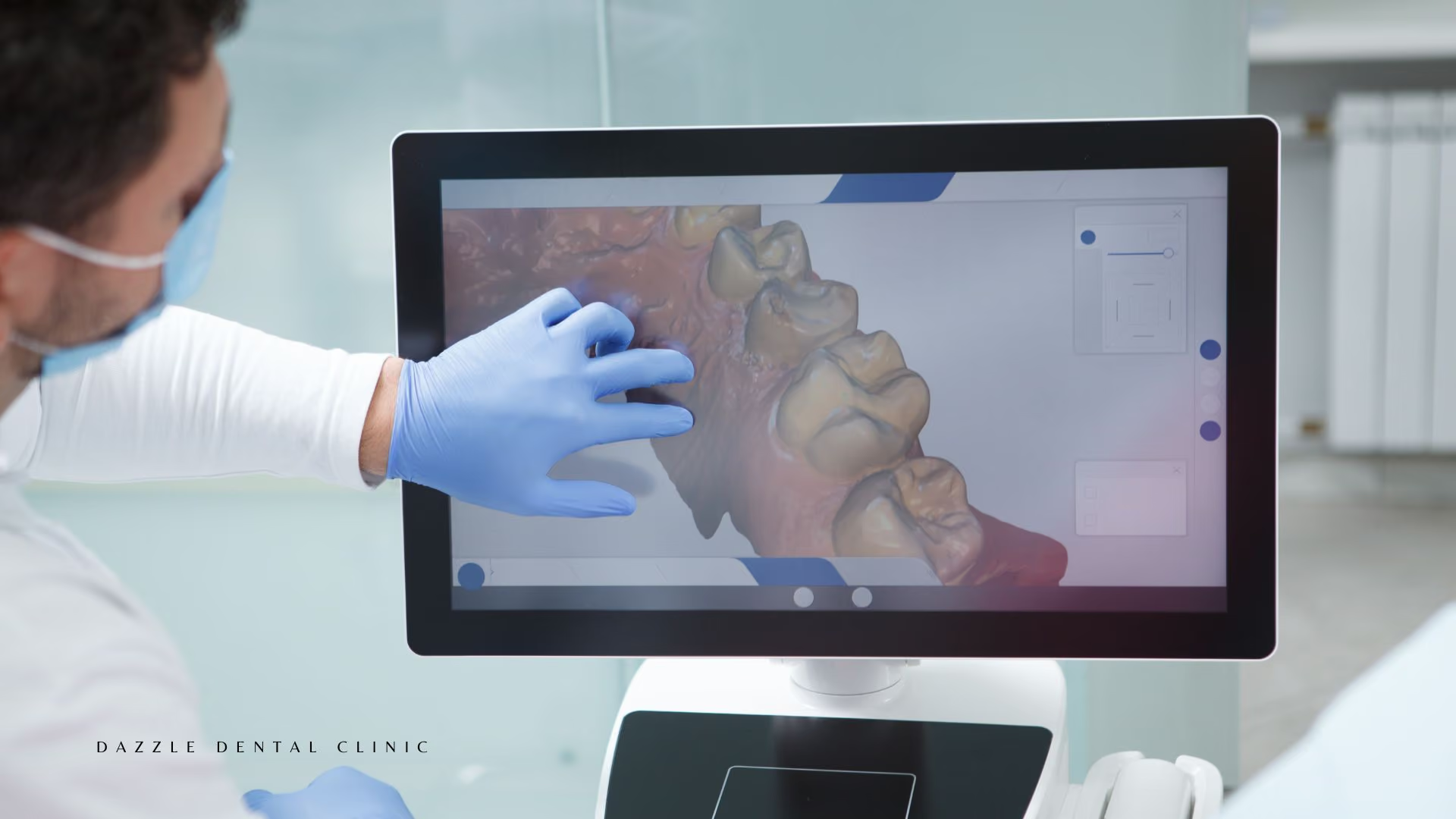
- Consultation and CBCT scan: a 3D CBCT scan measures bone height, width and density and shows the sinus and nerve. Digital scans of your mouth and photos are taken for the new teeth.
- Digital planning: implant positions and angles are planned on the scan. At Dazzle, surgery can be guided with ClaroNav Navident, a real-time guidance system that tracks the drill against the plan.
- Surgery: remaining failing teeth are removed, infected tissue is cleaned, and the implants are placed under local anaesthetic, with sedation if you prefer. Surgery on one arch usually takes a few hours to complete.
- Temporary teeth: if the implants are stable enough at placement, a fixed temporary bridge is attached soon after surgery. For qualified cases, fixed teeth can be in place within 72 hours of surgery.
- Healing: the implants fuse with the bone (osseointegration) over roughly three to six months. You eat a soft diet at first and attend review visits.
- Final bridge: new impressions or scans are taken and the final bridge is made and fitted.
The procedure and the temporary-to-final sequence are covered in more detail on our All-on-4 dental implants page.
Temporary teeth, then final teeth
At Dazzle the temporary bridge is PFM (porcelain-fused-to-metal), preferred for longevity and aesthetics. It holds the healing implants together and lets you test the look, speech and bite first.
The final bridge is usually stronger: a titanium or zirconia framework with acrylic or ceramic teeth, or a full zirconia bridge. Each has trade-offs in weight, chip resistance, cost and how easy it is to repair. Our guide to zirconia, PFM and acrylic options compares them.
Implant brands used at Dazzle include Straumann, Nobel Biocare, MegaGen and Osstem, chosen by case need and patient preference. All-on-4 starts from ₹3,00,000 per arch. The final cost depends on the number of implants, the brand and the bridge material; see our fees page.
Aftercare
For the first few days, expect swelling and some soreness, managed with prescribed medicines and cold packs. Most people return to desk work within a few days.
- Diet: soft foods for the first weeks, then a gradual return to normal food as advised. Avoid biting very hard items on the temporary bridge.
- Cleaning: brush twice a day and clean under the bridge with a water flosser, interdental brushes or super floss. Plaque under the bridge can cause peri-implantitis, an infection that destroys bone around implants. It takes a few extra minutes a day.
- Smoking: stopping, at least through healing, lowers the risk of implant failure.
- Night guard: if you grind your teeth, a night guard protects the bridge.
- Reviews: professional cleaning and checks, usually every three to six months. The bridge may be removed by the dentist at some visits for thorough cleaning.
Our article on post-implant care for All-on-4 and All-on-6 lists the daily routine step by step.
Common myths about All-on-4 and All-on-6
"It is only for elderly people"
Age is not the deciding factor. Younger adults who have lost teeth to gum disease, decay, trauma or a genetic condition can be treated if their health and bone allow.
"The surgery is very painful"
The surgery is done under local anaesthetic, with sedation available. Swelling and soreness for several days afterwards are normal and are controlled with medicines. Guided placement can reduce the size of the surgical area in some cases.
"You go without teeth for months"
When the implants are stable enough for immediate loading, a fixed temporary bridge is fitted soon after surgery, so you are not left without teeth while the bone heals. If stability is not enough, a short delay before loading is the safer choice.
"Four implants cannot be as strong as more implants"
Studies with long follow-up report survival rates for All-on-4 that compare well with other fixed full-arch designs, provided bone, planning and maintenance are good. Results depend on the case, and more implants are chosen when the bone or bite calls for it.
"Bone grafting is always needed"
Tilted back implants often avoid grafting. Some patients still need a graft or sinus lift, or an alternative such as zygomatic implants, and the CBCT scan decides this.
"It looks fake"
The bridge is designed around your face, lip line and speech, and tried in first as the temporary. Gum-coloured material replaces lost gum where needed, so the result can look natural.
Want to know if you qualify for All-on-4 or All-on-6? Book a Consult at our Bandra West or Kemps Corner clinic.

.avif)
