.webp)

Implant brand selection at Dazzle Dental Clinic is case-specific, not uniform. We use Straumann (including Neodent), Nobel Biocare, and MegaGen, each selected based on the clinical requirements of the individual patient. Nobel Biocare occupies a specific and well-defined role in our implant protocols — this article explains what that role is and why the clinical evidence supports it.
Nobel Biocare's Specific Clinical Strengths
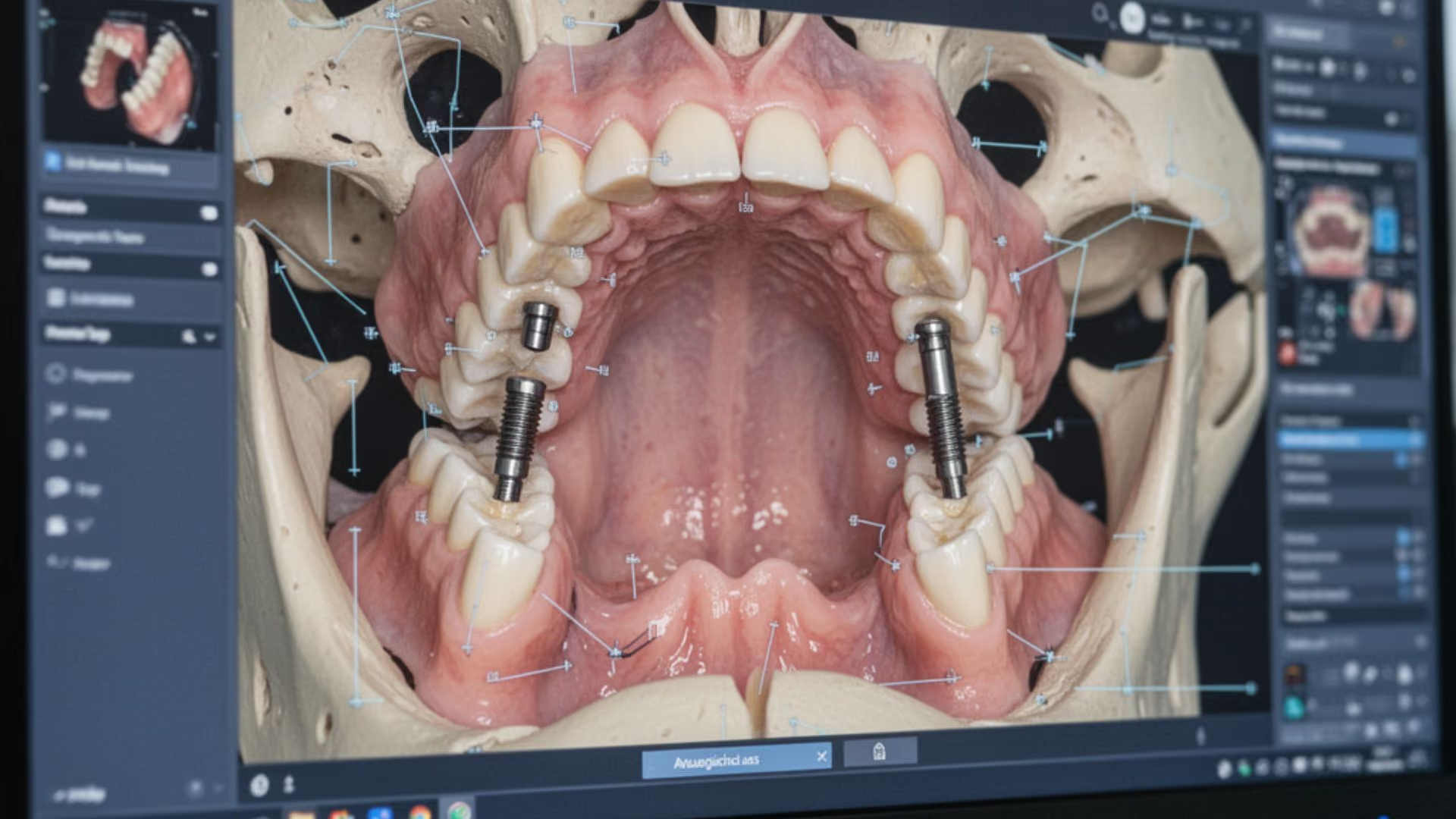
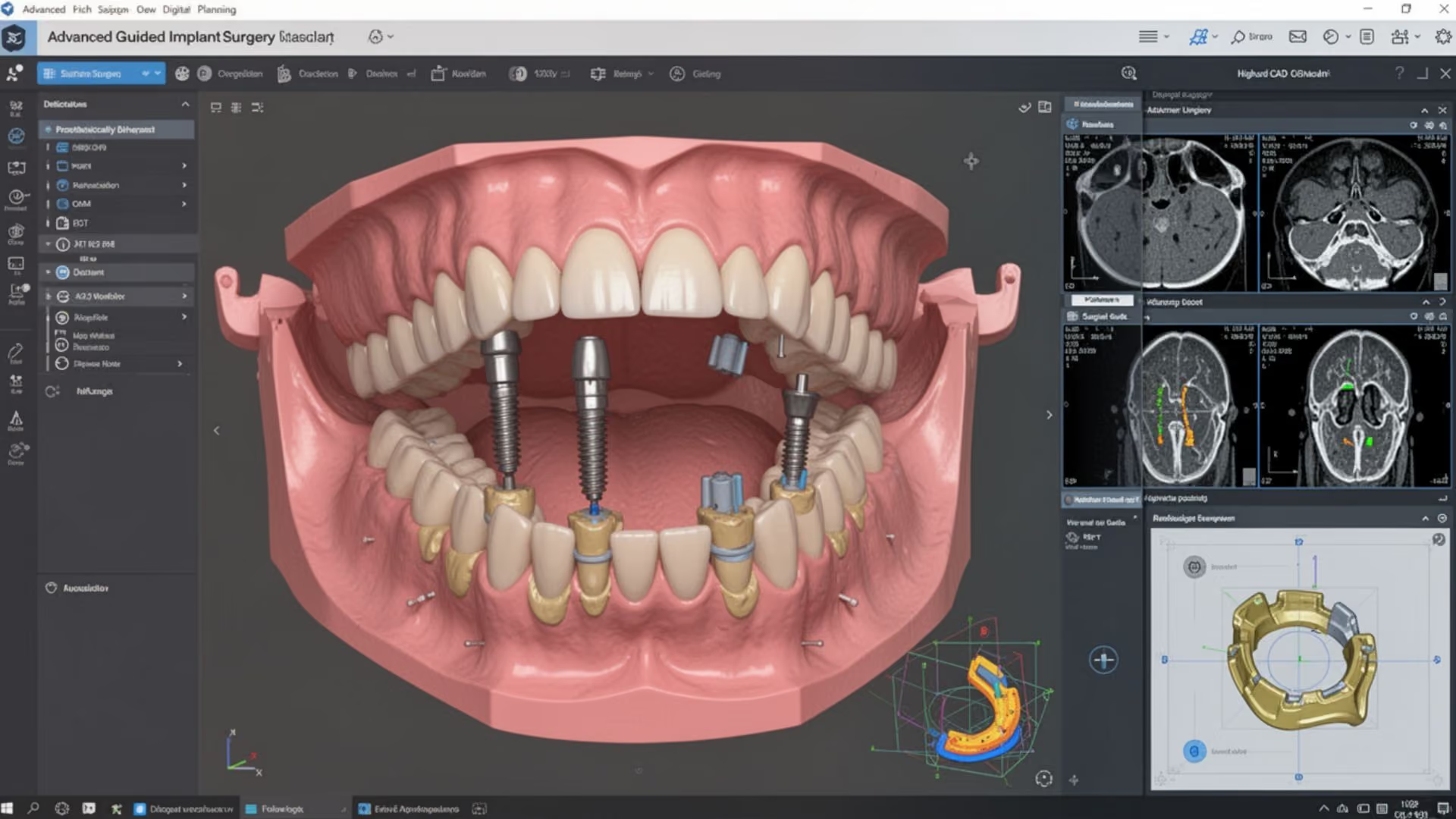
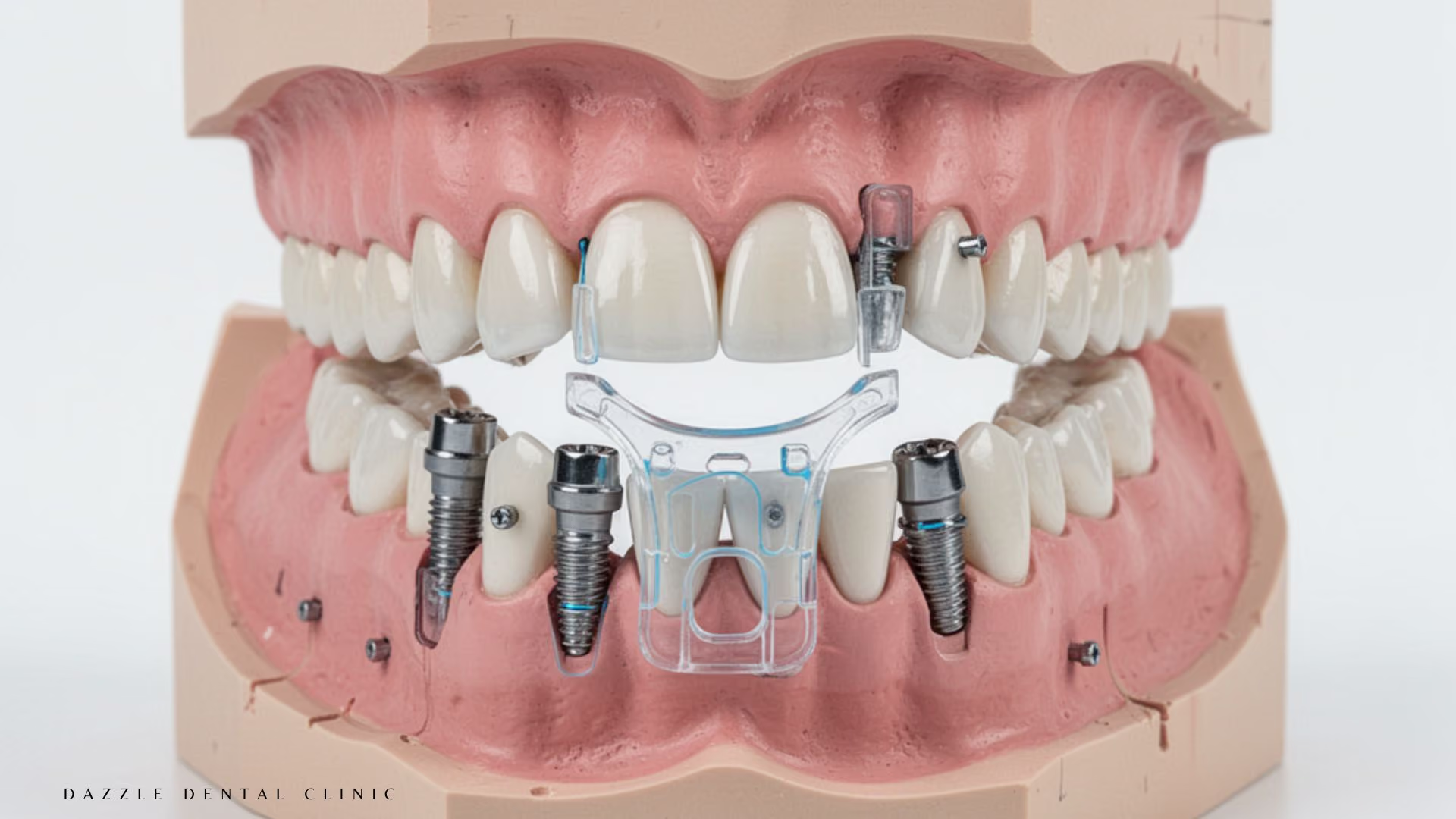
Nobel Biocare developed the original All-on-4 concept. The system was designed specifically for full-arch immediate loading protocols — see our All-on-4 treatment page — and the Nobel Active implant — their tapered, self-cutting design — was engineered for one specific purpose: achieving maximum primary stability in variable and compromised bone quality.
The thread geometry of Nobel Active is deliberately aggressive. Rather than cutting threads into bone as a conventional drill-thread sequence does, the tapered body and self-cutting apical design condense and compress bone laterally as the implant is driven home. In soft bone (Misch Type III–IV, which is common in the posterior maxilla), this condensation effect can generate insertion torques 10–15 Ncm higher than a conventional implant design in the same bone. That difference, in the context of immediate loading where a 35 Ncm threshold is the clinical minimum, can be the determinant between same-day teeth being clinically safe and requiring delayed loading.
The TiUnite surface — a microporous, moderately roughened, anodically oxidised titanium dioxide layer — has published 15-year follow-up data supporting crestal bone stability. TiUltra, the newer surface, demonstrates improved osteoblast early attachment in cell culture studies and shows encouraging clinical data for accelerated osseointegration. These are not marketing claims; they are published in independent peer-reviewed journals and form part of the evidence base that defines the system as clinically appropriate for demanding full-arch protocols.
The All-on-4 Connection
Nobel Biocare's ownership of the All-on-4 concept has a practical implication: the most extensive clinical data series for All-on-4 as a protocol use Nobel implants. Published long-term studies with 10+ year follow-up for All-on-4 predominantly use Nobel Active or Nobel Parallel implants. This does not mean other implant systems cannot be used successfully with the All-on-4 protocol — they can and are. But when a patient asks how long this protocol has been studied, in how many patients, with what outcomes, the deepest answer lies in the Nobel Biocare data.
At Dazzle, Nobel Active is our first-choice implant for full-arch cases with variable bone quality, particularly in the posterior maxilla. For cases where bone quality is excellent throughout and the primary stability concern is lower, MegaGen AnyRidge or Straumann BLX may be equally appropriate and are selected based on site-specific factors.
When Dazzle Uses Nobel Biocare Specifically
Nobel Active is most strongly indicated when: bone quality in the posterior implant sites is anticipated to be Type III or softer (posterior maxilla); immediate loading is planned and maximum primary stability is the priority; the case involves angled implants in the All-on-4 configuration, where the thread-bone engagement at the angled site determines whether the loading protocol is safe.
Nobel Parallel or Nobel Replace (conventional cylindrical implants) are used for single-tooth cases and straighter multi-tooth cases where primary stability is not the primary challenge and conventional osseointegration timing is acceptable.
Honest Limitations
Nobel Biocare implants carry the highest per-unit cost of the systems we use. For single-tooth cases in dense, healthy bone where primary stability is not the clinical challenge, Straumann or MegaGen provide comparable outcomes at a lower cost. We recommend Nobel Active where its specific properties add clinical value — not as a default premium option added to every case to justify a higher quote.
Nobel Biocare's proprietary component ecosystem also means that prosthetic components are generally more expensive than equivalents for other systems. For patients who travel internationally for treatment, this affects the total case cost estimate and is factored into the treatment plan transparently.
FAQs
Q1: Does Dazzle Dental Clinic always use Nobel Biocare?
No. We use Straumann (including Neodent), Nobel Biocare, and MegaGen, selected based on the clinical requirements of each case. Nobel Biocare is specifically selected for full-arch immediate loading cases, particularly in the posterior maxilla where soft bone makes primary stability the primary challenge.
Q2: Is Nobel Biocare the best implant system available?
It is among the two or three most extensively documented systems available. “Best” is case-specific: for a full-arch immediate loading case in soft posterior bone, Nobel Active is arguably the most appropriate system. For a straightforward single tooth in dense bone, comparable outcomes are achievable with other well-documented systems.
Q3: What is the All-on-4 concept and did Nobel Biocare develop it?
All-on-4 describes the placement of four implants — two axial anterior and two angled posterior — to support a full arch prosthesis with immediate loading. The concept was developed by Paulo Maló in collaboration with Nobel Biocare and published in the early 2000s. The initial clinical series and subsequent long-term follow-up data predominantly used Nobel Biocare implants.
Q4: How do I know which implant system will be used in my case?
At Dazzle, the implant system is specified in your treatment plan documentation and explained at consultation with clinical reasoning. We do not present a generic “premium implant” option without identifying the specific brand and model. If this is not offered at other clinics you are evaluating, ask for it specifically. For a full comparison of all systems, see our implant brands guide or our dedicated Nobel Active deep-dive.