.webp)

Conventional 2D dental X-rays — periapical and panoramic — provide a flat projection of three-dimensional anatomy. They show bone height adequately. They do not reliably show bone width, bone density distribution, the three-dimensional relationship between a planned implant and the inferior alveolar nerve, the true extent of a periapical lesion, or the presence of an additional root canal system in a molar. For routine diagnostics, 2D imaging is appropriate. For treatment planning that involves navigating complex anatomy or placing surgical hardware, it is not.
Cone Beam Computed Tomography (CBCT) produces a three-dimensional volumetric dataset of the jaw that can be viewed in axial, coronal, and sagittal planes simultaneously. At Dazzle Dental Clinic, CBCT is standard for all implant cases, all zygomatic and pterygoid implant assessments, complex endodontic cases, surgical orthodontic planning, and third molar evaluation near the inferior alveolar canal.
CBCT for Implant Planning: What It Changes
For single implant placement, CBCT provides: bone width at the planned implant site (which determines whether the planned implant diameter fits within the bone without perforating either cortex); bone height above critical structures (inferior alveolar nerve canal in the mandible, sinus floor in the posterior maxilla); bone density classification (Misch Type I–IV) for selecting the implant system and loading protocol; and the precise three-dimensional relationship between the planned implant axis and the eventual crown position.
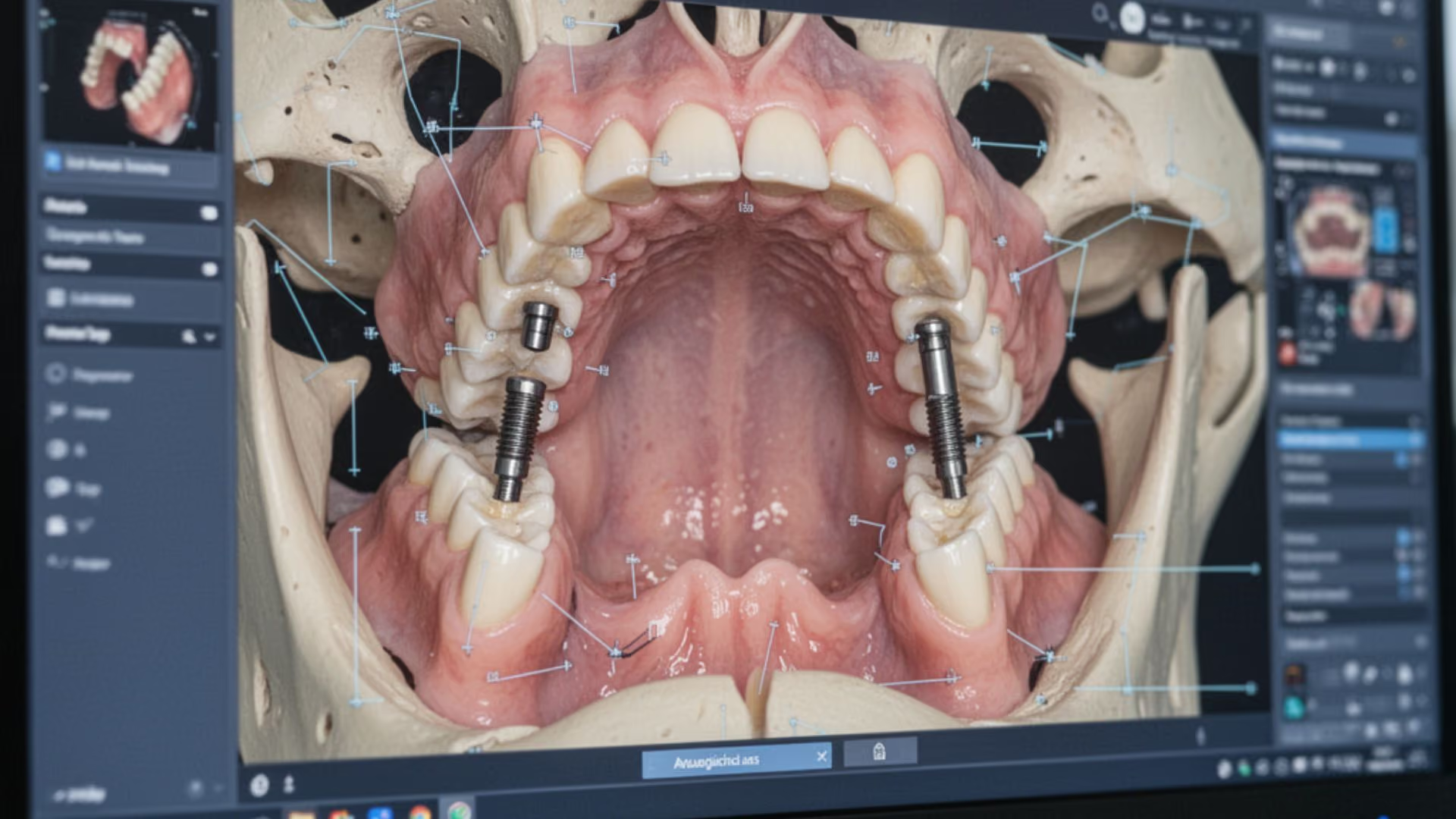
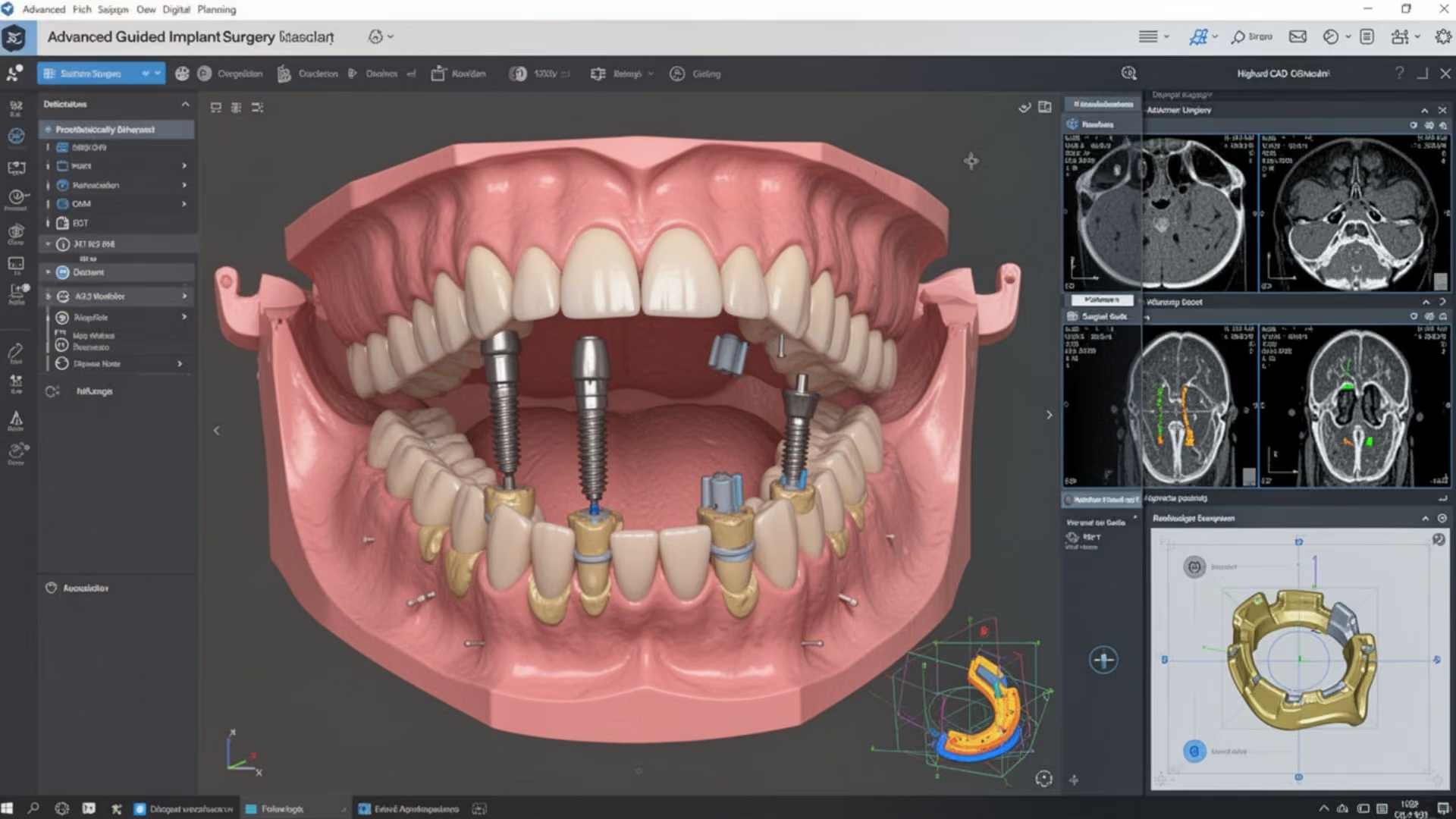
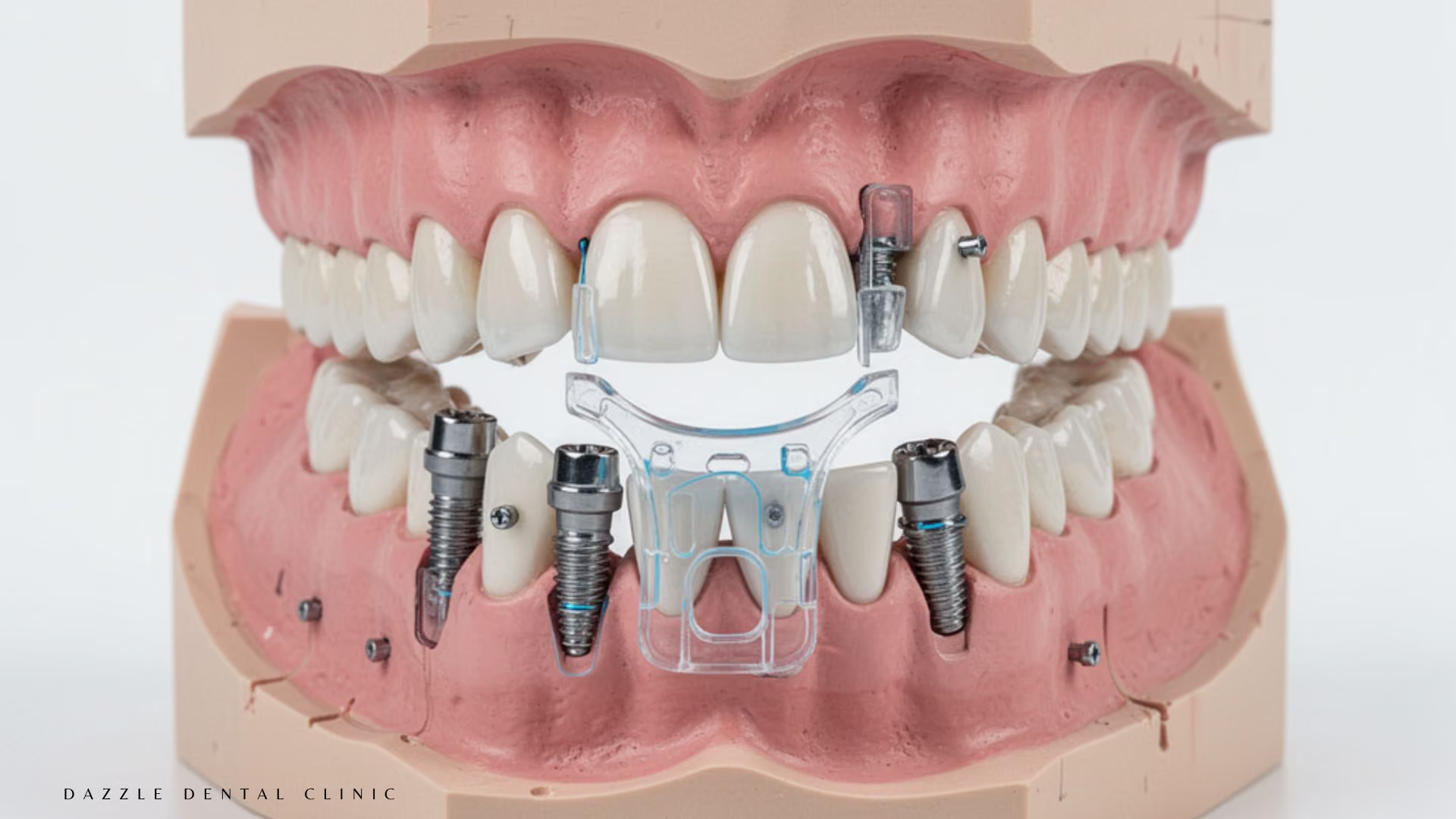
The virtual implant is placed in the CBCT dataset before surgery begins. If the planned position creates a nerve proximity risk or a perforation risk, it is modified before the patient enters the surgical chair. The CBCT also feeds the virtual surgical plan from which the Asiga Max 3D printer produces the surgical guide — constraining the drill to the planned position within under 1mm apex deviation during surgery.
For zygomatic and pterygoid implants, CBCT is non-negotiable. The zygomatic implant traverses the maxillary sinus and anchors in the zygomatic bone. The trajectory must be planned around the orbital floor, the infraorbital nerve, and the zygomatic arch anatomy. Without three-dimensional data, this planning is not possible safely.
CBCT for Endodontics and Periapical Assessment
CBCT reveals: additional root canal systems not visible on periapical X-ray (MB2 canal in upper first molars, present in 60–95% of cases, often missed on 2D imaging); root fractures producing bucco-lingual splits invisible on periapical film; periapical lesion extent in three dimensions (relevant for apicoectomy planning); and root proximity to adjacent tooth roots or sinus floor relevant to root canal surgery planning.
Radiation Exposure: Contextualising the Dose
The radiation dose from CBCT varies by field of view (FOV). A small FOV CBCT (single quadrant) delivers approximately 20–40 μSv. A large FOV full-arch scan delivers 60–100 μSv. A standard panoramic X-ray delivers 15–20 μSv. A chest X-ray delivers approximately 20–30 μSv. A transatlantic flight delivers approximately 80–100 μSv of background cosmic radiation. The clinical information gained from a CBCT for a complex implant case justifies the dose. CBCT is not used for routine check-ups where 2D imaging provides the required information.
DICOM Files for International Patients
CBCT data is stored in DICOM format. International patients can send their existing CBCT DICOM files to Dazzle for remote assessment before travel. If local imaging is not available, a CBCT can be arranged as the first step of the initial appointment. The DICOM data is yours — it is provided on request for your home dentist’s records.
FAQs
Q1: Does every patient need a CBCT before getting implants?
At Dazzle, yes — for implant surgery. A panoramic X-ray can identify gross bone deficiency but cannot provide the dimensional accuracy or structural detail required for safe implant planning. The CBCT ensures the implant position is designed against your actual three-dimensional anatomy rather than a flat approximation of it.
Q2: Is the radiation from a CBCT dangerous?
The dose from a small-FOV CBCT (20–40 μSv) is comparable to a single chest X-ray or a long-haul flight. It is not accumulated in the body — the dose is received during the scan and does not persist. For a procedure like implant surgery where the clinical information from the CBCT directly affects surgical safety, the dose is clinically well-justified.
Q3: Can I bring a CBCT from another clinic?
Yes. If a CBCT has been taken within the past 6–12 months and includes the relevant anatomy, it can be used for treatment planning at Dazzle. International patients can send DICOM files by email for remote assessment before committing to travel.
Q4: What is the difference between a CBCT and a regular panoramic X-ray (OPG)?
A panoramic X-ray is a two-dimensional projection — it shows bone height and gross anatomy in a single plane. A CBCT provides a three-dimensional volumetric dataset that can be sliced in any orientation. CBCT shows bone width (not visible on OPG), precise nerve canal location in three dimensions, bone density distribution, and root anatomy. For implant planning and complex surgical cases, the additional information from CBCT is clinically required, not optional.