.webp)

Platelet-Rich Fibrin (PRF) is a biological preparation derived from the patient's own blood that concentrates growth factors — proteins that regulate cell migration, proliferation, and differentiation in healing tissue. At Dazzle Dental Clinic, PRF is incorporated into implant surgery, bone grafting, and periodontal procedures to accelerate soft tissue healing, support bone regeneration, and reduce post-operative inflammation. The full regenerative protocol is described on our guided tissue regeneration page.
What PRF Contains and Why It Matters
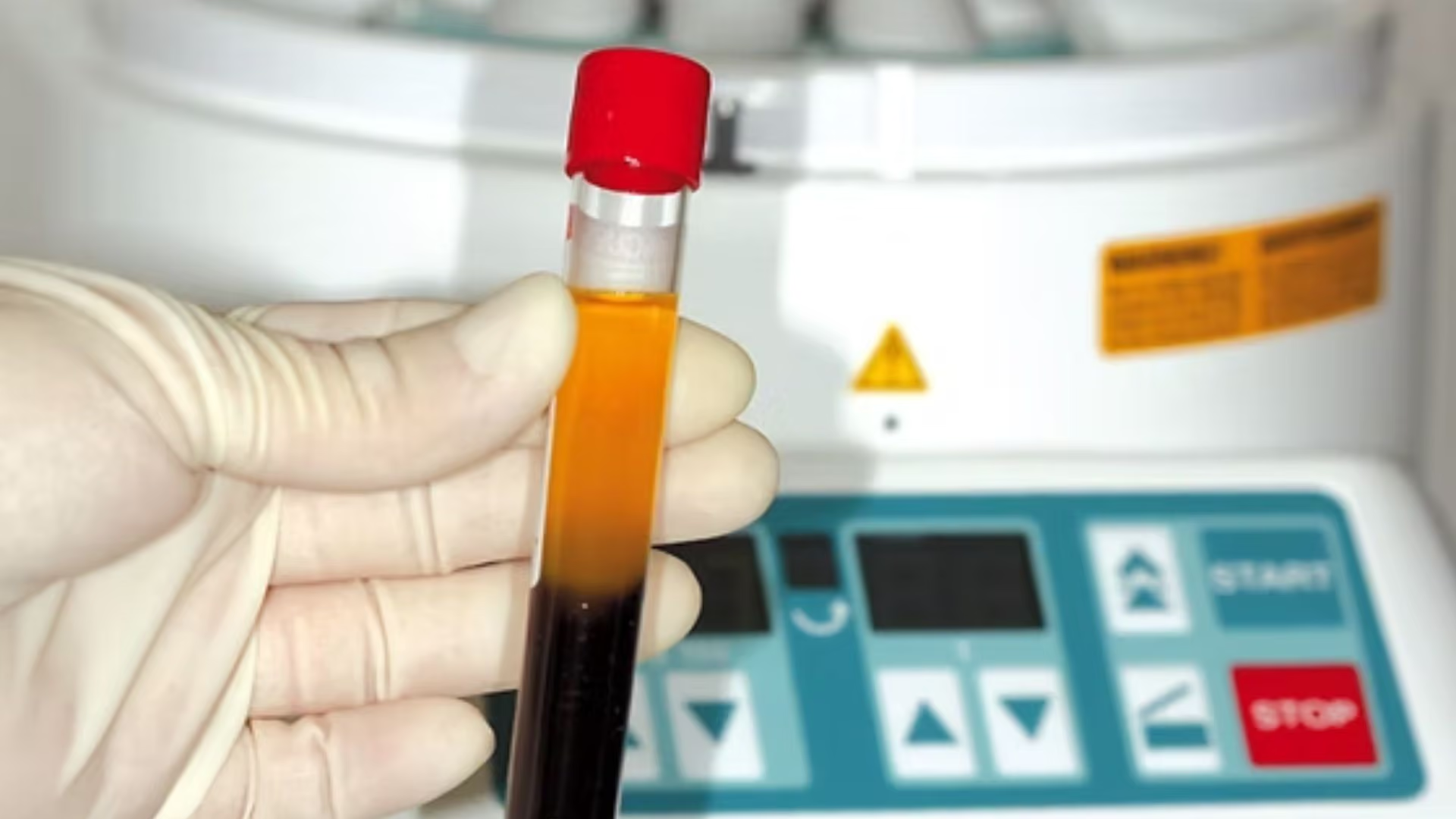
When blood is drawn and centrifuged without anticoagulants (the L-PRF protocol), it separates into three layers. The buffy coat layer is captured as a fibrin clot containing platelets, leukocytes, and a high concentration of growth factors released from these cells during the centrifuge process. The key factors: PDGF, TGF-β, VEGF, EGF, and IGF — each coordinating a specific aspect of tissue repair and bone formation. The fibrin matrix provides a scaffold for cell migration and delivers growth factors in a sustained, physiological release as the clot dissolves over 10–14 days.
PRF in Sinus Lift Surgery
In lateral window sinus lifts, the graft material is mixed with PRF membranes and plugs. The PRF fibrin scaffold binds graft particles, reducing graft migration and stabilising volume during early healing. Growth factor release stimulates earlier mineralisation of the graft material — implant placement timelines can be reduced by 4–6 weeks compared to graft alone. See our detailed sinus lift and PRF guide for the full clinical explanation.
Implant placement sites: PRF membrane placed at the implant neck and peri-implant space at placement. Reduces peri-implant soft tissue inflammation during the healing period; supports early soft tissue coverage of the implant shoulder.
Periodontal regenerative surgery: PRF combined with bone graft in infrabony periodontal defects during GTR procedures. Additional growth factor supply to the defect site beyond what the membrane alone provides. See our illustrated PRF guide for clinical examples.
PRF vs PRP: Why the Distinction Matters
PRP (platelet-rich plasma) and PRF are both blood-derived preparations, but they are not the same. PRP is centrifuged with anticoagulants and produces a liquid product that is injectable or mixable. PRF is prepared without anticoagulants, producing a solid fibrin membrane. The fibrin scaffold is the key difference: it provides the sustained growth factor release that injectable PRP cannot replicate. In published comparisons of PRP vs PRF in sinus lift and bone regeneration applications, PRF consistently shows better bone volume and density outcomes at the graft site.
What PRF Cannot Do
PRF is an adjunct to correctly planned surgery — it accelerates and supports healing but does not substitute for adequate graft volume, correct membrane positioning, or appropriate systemic conditions. Osseointegration still requires 8–12 weeks. Sinus lift grafts still require 4–6 months to consolidate. PRF can shorten these timelines modestly and improve graft quality, but it cannot overcome fundamentally compromised surgical planning or inadequate graft volume.
FAQs
Q1: Is PRF safe?
Yes. PRF is autologous — prepared from the patient's own blood, with no donor material, no anticoagulants, and no additives. There is no risk of allergic reaction or disease transmission.
Q2: Does PRF guarantee faster healing?
PRF demonstrably accelerates early healing in published controlled studies — but it does not override the fundamental biology of bone formation or eliminate the need for adequate graft consolidation time. Sinus lifts with PRF are typically ready 4–6 weeks earlier than graft alone; osseointegration of implants is not meaningfully shortened by PRF addition.
Q3: Is there any reason PRF might not be appropriate for me?
Patients on anticoagulants or with clotting disorders may have reduced platelet function, affecting PRF quality. This is assessed in the pre-surgical medical history review. Otherwise, PRF is appropriate for all patients without specific haematological contraindications.
Q4: Is PRF charged separately at Dazzle?
At Dazzle, PRF preparation is included in implant surgery and bone grafting procedures where it is used. It is not an optional upsell charged separately for routine implant cases.