.webp)

The question most patients ask isn’t “What is All-on-4?” — it’s “Am I a candidate?” And often they’re asking because someone has already told them no: no, you don’t have enough bone. No, your health makes it too risky. No, your dentures will have to do.
Some of those answers are accurate. Others are not — they reflect the limits of the clinician's experience rather than the limits of the technique. This guide explains what candidacy for All-on-4 dental implants actually involves, what the real disqualifying factors are, and what to do if you've been turned away elsewhere.
The Core Requirement: Enough Bone to Place Four Implants
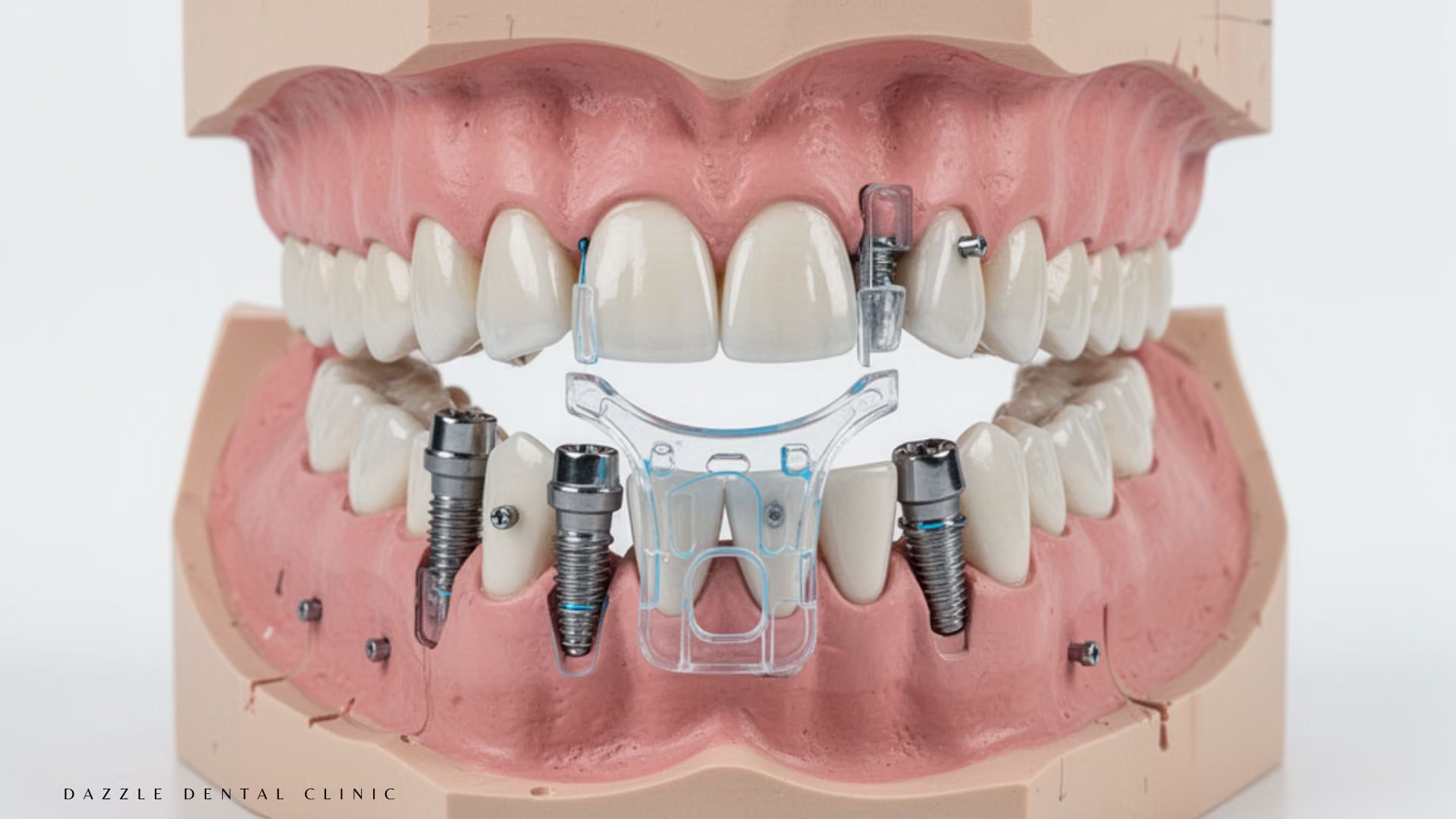
All-on-4 candidacy starts with bone — but not as much as most patients assume. The angled posterior implants in the All-on-4 design were specifically engineered to engage denser bone in the anterior jaw, bypassing the posterior regions where resorption is typically most severe. This is why All-on-4 was developed in the first place: to deliver full-arch rehabilitation without the bone grafting that traditional implant protocols require.
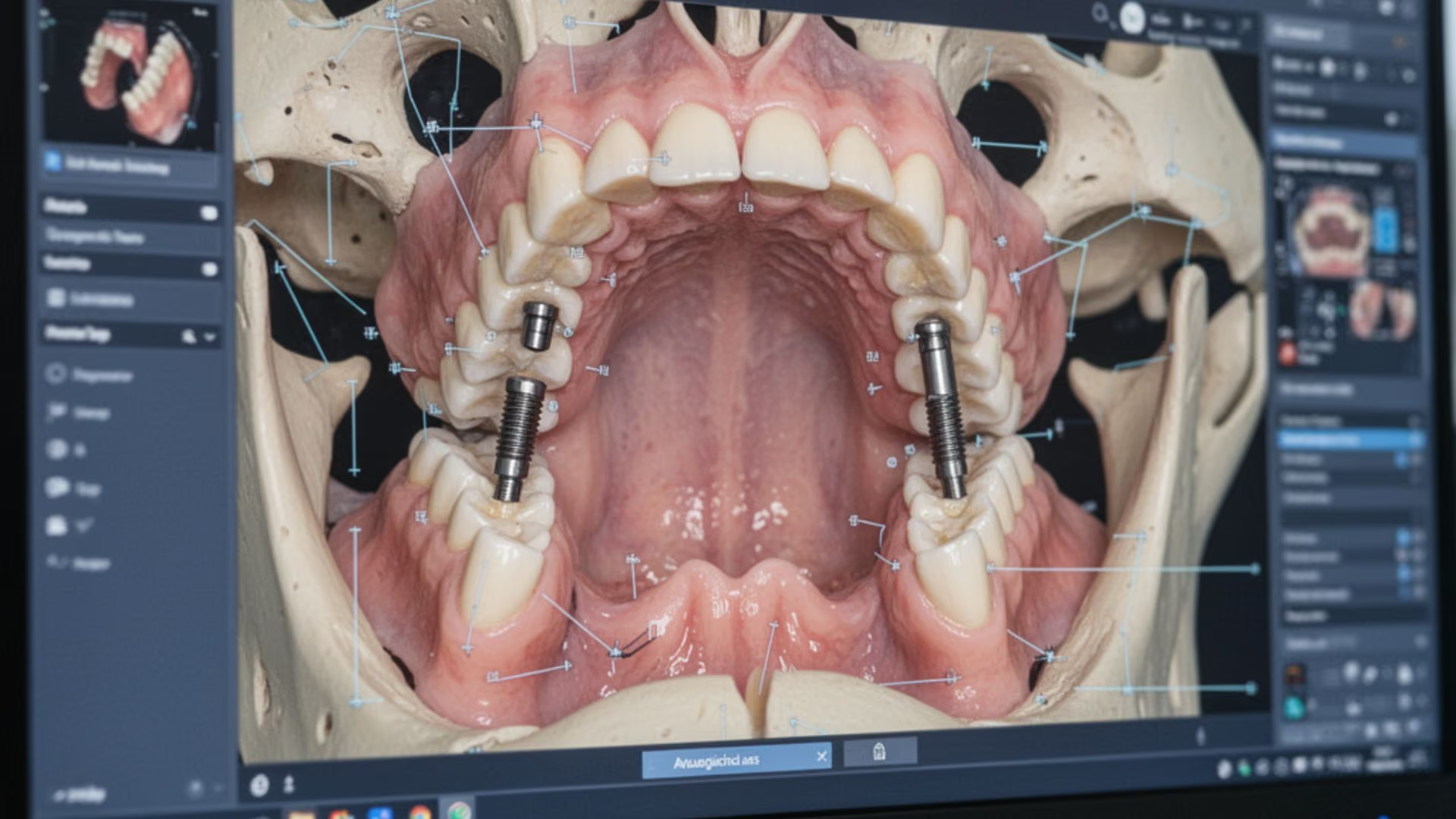
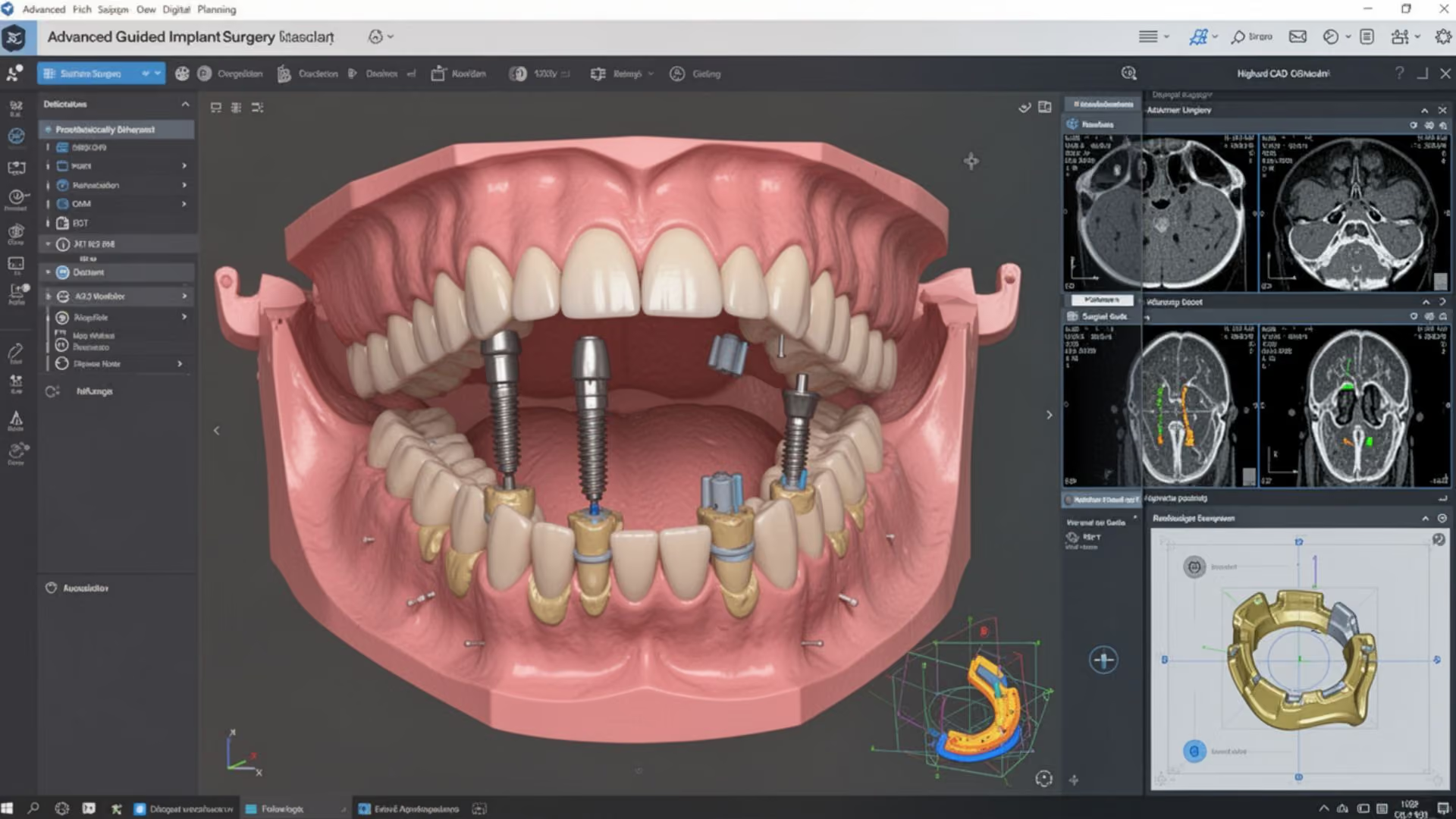
Moderate bone loss does not disqualify you. What matters is whether there is sufficient bone volume and density at the four implant sites to achieve the primary stability needed for osseointegration. That determination cannot be made from a panoramic X-ray alone. It requires a CBCT 3D scan that maps bone in three dimensions. If you’ve been told you lack bone based on a 2D X-ray, that is incomplete assessment.
Severe bone loss — particularly in the upper jaw, where the maxillary sinus expands as bone resorbs — may require alternative solutions: zygomatic or pterygoid implants that anchor in the cheekbone or pterygoid plate, or bone augmentation prior to conventional implant placement. These options exist for precisely this scenario.
Medical Conditions: What Actually Matters vs. What’s Often Overstated
Genuinely complicating factors:
Uncontrolled diabetes affects healing by impairing circulation and immune response. The emphasis is on “uncontrolled” — patients with well-managed diabetes (HbA1c below 7.5–8%) have implant success rates comparable to non-diabetic patients. If your diabetes is controlled, it is not a disqualifier. If it isn’t, getting it under control before surgery is the sensible first step.
Active smoking significantly increases implant failure risk — smokers have roughly double the failure rate of non-smokers, primarily due to impaired vascular supply at the implant site. This is a genuine risk factor. We discuss this directly with patients, not to refuse treatment, but to ensure informed decision-making. Smoking cessation before and after surgery improves outcomes meaningfully.
Bisphosphonate medications (commonly used for osteoporosis) can affect jaw bone metabolism and healing. The risk level depends on the specific drug, dose, and duration of use. Intravenous bisphosphonates carry significantly higher risk than oral formulations. This requires individual assessment with the prescribing physician — it is not an automatic disqualifier.
Active chemotherapy or radiation to the head and neck impairs bone healing and vascularisation. Implant surgery is typically deferred until treatment is complete and recovery is confirmed.
Conditions often overstated as disqualifiers: age (there is no upper age limit for All-on-4 — successful outcomes are achieved routinely in patients in their 70s, 80s, and beyond), controlled autoimmune conditions, and mild to moderate medical comorbidities that are well-managed.
You Don’t Need to Be Missing All Your Teeth
Patients with multiple failing, heavily restored, or periodontally compromised teeth sometimes make the most practical All-on-4 candidates. The decision to extract remaining teeth and proceed with full-arch implants rather than continuing restorative firefighting is a clinical and financial calculation that many patients find clearly favours the implant route once it's mapped out honestly.
If you have several remaining teeth that are failing or at high risk, this conversation is worth having. The long-term cost and disruption of ongoing piecemeal restorations often exceeds the cost of a definitive implant solution by a significant margin.
Existing Denture Wearers: A Practical Conversation
Current denture wearers — particularly those frustrated with instability, restricted diet, or ongoing adjustments — are frequently excellent All-on-4 candidates. The challenge with long-term denture wear is that the jawbone continues to resorb without tooth roots stimulating it. The longer dentures have been worn, the more bone may have resorbed. This is not a reason to delay indefinitely; it’s a reason to assess sooner rather than later.
See a more detailed comparison in our overdentures vs All-on-4 guide.
How Candidacy Is Properly Assessed
At Dazzle Dental Clinic, candidacy assessment includes a CBCT 3D scan, a full medical history evaluation, clinical examination of remaining tissue and bite, and a frank discussion of your goals and expectations. We tell patients clearly when they are straightforward candidates, when they require additional preparation, and in the rare cases where implants genuinely are not appropriate — along with what the alternatives are.
If you’ve been told you’re not a candidate elsewhere and want a second opinion, we welcome that conversation. Send us your recent CBCT scan if you have one, or book an in-person or remote consultation. Our team will give you an honest, specific answer based on your actual anatomy — not a conservative blanket response.
FAQs
Q1: Can I get All-on-4 implants if I’ve been told I don’t have enough bone?
Possibly. The All-on-4 design was created to work in areas of bone loss. Whether you qualify depends on where the bone loss is and how much remains at the planned implant sites — which requires a CBCT scan to determine accurately. Patients turned away after a 2D X-ray assessment alone often qualify after proper 3D imaging.
Q2: Is there an age limit for All-on-4 implants?
There is no upper age limit. Age itself is not a disqualifying factor. Older patients are assessed on overall health, bone volume, and healing capacity — all of which vary considerably between individuals. Patients in their late 70s and 80s routinely achieve successful outcomes.
Q3: I’m a smoker. Can I still get All-on-4?
Yes, though smoking significantly increases complication and failure risk. We have this conversation directly with every patient who smokes. Stopping smoking before surgery and during the healing period (minimum 2–3 months) markedly improves outcomes. We don’t refuse treatment, but we ensure patients understand the risk clearly.
Q4: I have a few teeth left but most are failing. Should I consider All-on-4?
This is one of the most important conversations in implant dentistry. If your remaining teeth are heavily compromised, the cumulative cost of ongoing treatment often exceeds the cost of a definitive implant solution. We map this out honestly at consultation so you can make a genuinely informed decision rather than one based on emotional attachment to compromised teeth.