


Mouthwash is a widely marketed oral hygiene product, but at Dazzle Dental Clinic, routine daily use of antibacterial mouthwash is not something the clinical team recommends for most patients. This is not a contrarian position. It reflects a growing body of evidence on the effects of antiseptic mouthwashes on the oral microbiome and the limits of what mouthwash actually achieves relative to correct mechanical oral hygiene.
Why Mouthwash Does Not Substitute for Brushing and Flossing
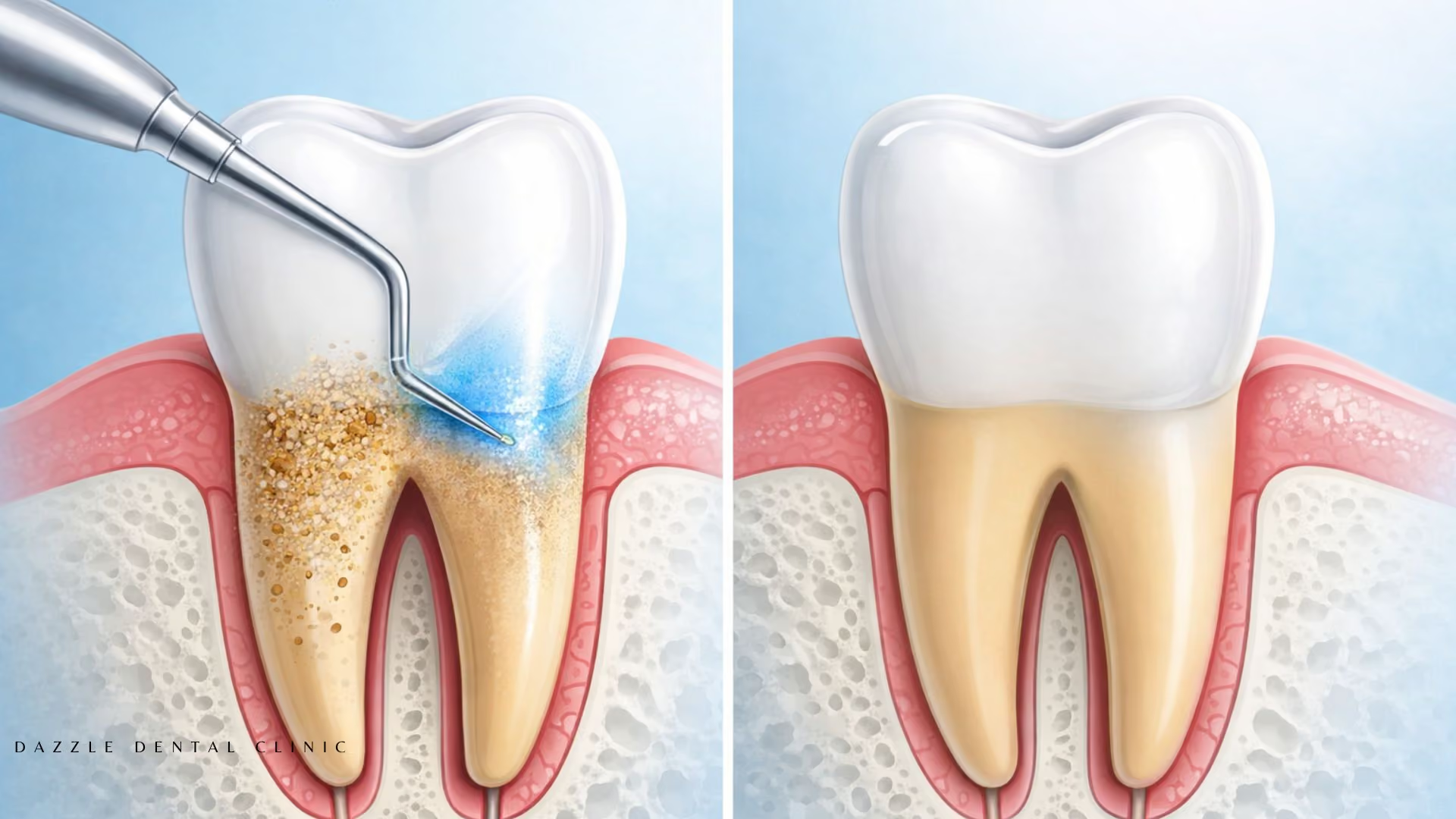
Dental plaque, the biofilm of bacteria, salivary proteins, and food debris that accumulates on tooth surfaces, is a physical structure. Mouthwash is a liquid that flows around teeth and gums. It cannot mechanically disrupt plaque the way a toothbrush and interdental brush do. Plaque that is not physically removed re-mineralises and becomes calculus (tartar); mouthwash cannot prevent this. The mechanical action of brushing and flossing removes plaque; mouthwash does not.
Mouthwash as a supplement to thorough brushing and flossing adds minimal clinical benefit for most patients with good technique. For patients with poor brushing technique who use mouthwash as a substitute, it provides a false sense of oral hygiene while the underlying plaque accumulation continues. The full clinical approach to periodontal health at Dazzle prioritises mechanical hygiene as the foundation.
The Oral Microbiome Concern
The mouth contains a complex ecosystem of bacteria, the oral microbiome, in which most species are commensal or beneficial. Antiseptic mouthwashes (chlorhexidine, cetylpyridinium chloride, alcohol-based formulas) cannot selectively eliminate pathogenic bacteria while preserving beneficial ones. They reduce the total bacterial load indiscriminately.
Published research has identified several mechanisms by which this indiscriminate reduction causes downstream effects. Nitrate-reducing bacteria in the oral cavity are responsible for converting dietary nitrates (from vegetables) to nitrite, which enters the circulatory system and contributes to nitric oxide production: a vasodilator that supports cardiovascular health. Studies have shown that antiseptic mouthwash use significantly reduces salivary nitrate reduction capacity. These findings do not mean mouthwash is dangerous for all patients at all times. They mean the routine daily use of antibacterial mouthwash without a specific clinical indication is difficult to justify against this background evidence.
When Mouthwash Is Indicated at Dazzle
Post-surgical healing: Chlorhexidine 0.12–0.2% is prescribed after implant surgery, bone grafting, periodontal surgery, or extractions where mechanical brushing at the surgical site is contraindicated during the first 1–2 weeks of healing. The benefit (infection prevention, reduced bacterial load at the surgical site) outweighs the microbiome disruption risk at this short-term prescribed dose.
Active gum disease management: During active treatment of moderate to severe periodontitis, adjunctive chlorhexidine rinse is prescribed alongside scaling and root planing in specific cases where bacterial control beyond what mechanical cleaning achieves is clinically warranted. Duration is typically 2–4 weeks, not ongoing. For active gum disease, see our gum surgery and professional teeth cleaning services.
Patients with high caries risk: Fluoride rinses (not antibacterial) are sometimes recommended as an adjunct for high-risk caries patients: a different product category from antibacterial mouthwash.
FAQs
Q1: If I've been using mouthwash daily for years, should I stop?
If your oral hygiene is otherwise thorough (correct brushing technique, interdental cleaning daily) and you have no active gum disease, there is no compelling clinical reason to continue routine antibacterial mouthwash use. The switch to focus on mechanical hygiene quality, technique, coverage, consistency, is the more effective and evidence-supported approach.
Q2: What about fluoride mouthwash?
Fluoride rinses are a different category from antibacterial mouthwash. For patients at elevated caries risk, a fluoride rinse can be a useful adjunct. The microbiome concern is primarily with antiseptic/antibacterial mouthwashes; fluoride rinses do not carry the same indiscriminate antibacterial mechanism.
Q3: What should I use for bad breath?
Persistent halitosis is almost always caused by inadequately cleaned interdental spaces, tongue biofilm, or gum disease: all of which mouthwash temporarily masks but does not treat. The effective interventions are: daily interdental cleaning (floss or interdental brushes), tongue scraping, and addressing any underlying gum disease.
Q4: Is alcohol-free mouthwash safer to use regularly?
Alcohol-free antiseptic mouthwashes are less irritating and avoid dry mouth effects, but they retain the same indiscriminate antibacterial mechanism. The microbiome concern applies to the antibacterial activity, not to the alcohol specifically. Alcohol-free is preferable when mouthwash is genuinely indicated; it is not a reason to use it routinely.

.avif)
