


In brief: A wisdom tooth needs removing when it causes or risks disease: repeated gum infection, decay, damage to the tooth in front, or a cyst. Removal is done under local anaesthetic, with sedation available, and a simple extraction often takes under half an hour. Most people are back to normal eating within about a week.
When a wisdom tooth needs to come out
Wisdom teeth (third molars) usually come through between the ages of about 17 and 25. Many jaws do not have room for them, so they get stuck (impacted) against the tooth in front or in the bone. Extraction is usually recommended for these reasons:
- Repeated pericoronitis. A partly erupted tooth leaves a gum flap that traps food and bacteria. One mild episode can be managed with cleaning, rinses and sometimes antibiotics; repeated infections are a reason to remove the tooth.
- Decay. The back of a wisdom tooth is hard to clean. Decay in the wisdom tooth, or in the back of the second molar caused by an impacted wisdom tooth, is a strong reason for removal.
- Gum and bone damage at the second molar. An impacted tooth can create a deep pocket behind the neighbouring molar.
- Cysts or other changes seen around an impacted tooth on X-ray.
- A tooth that cannot be restored, such as a badly broken or decayed wisdom tooth.
When it can be left alone
A wisdom tooth that has come through fully, is in a good position, can be cleaned and is not causing disease does not need to come out. A fully buried tooth with no symptoms and no changes on X-ray may simply be monitored with periodic X-rays, particularly in older adults, where the surgery carries more risk. At Dazzle, extraction is recommended only when there is a clinical reason for it.
Assessment and CBCT scans
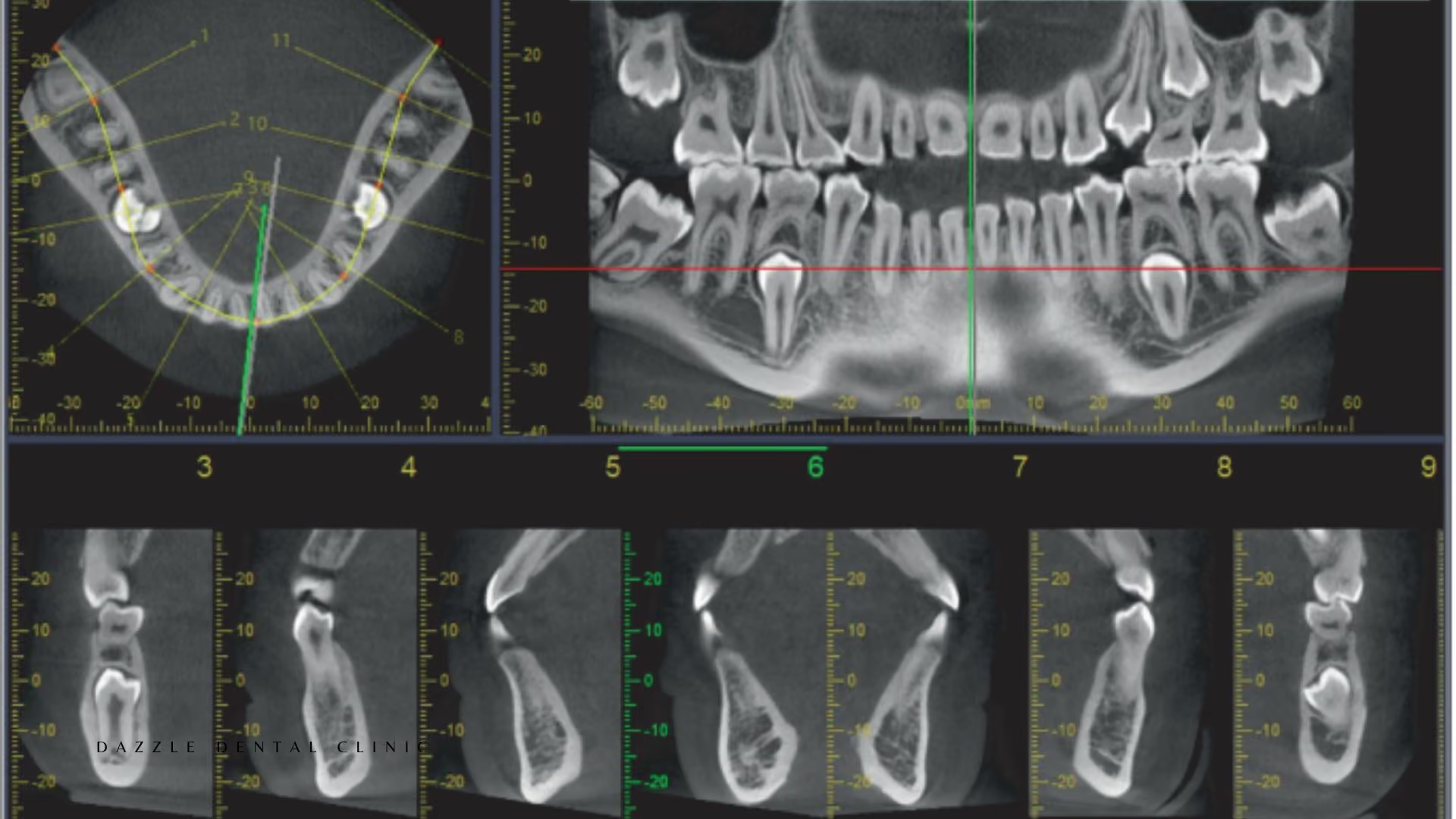
The dentist examines the area and takes an X-ray, usually an OPG, to see the tooth's position, roots and surrounding bone. For lower wisdom teeth whose roots appear close to the inferior alveolar nerve (the nerve giving feeling to the lower lip and chin), a CBCT 3D scan shows the exact relationship. This helps the surgeon plan the safest approach and decide whether a different technique, such as coronectomy, is safer.
Read more about 3D scans in our guide to CBCT in dental diagnosis.
What happens during the extraction
Simple extraction
For a wisdom tooth that has fully come through with straightforward roots, the area is numbed with local anaesthetic, the tooth is loosened and removed, and the socket is cleaned. The tooth is sectioned if the roots are curved or spread. This often takes about 15-30 minutes.
Surgical extraction of an impacted tooth
For a tooth partly or fully in bone, the surgeon makes a small cut in the gum, removes a little bone over the crown, divides the tooth into pieces if needed and lifts them out. The site is rinsed and stitched. At Dazzle, an oral and maxillofacial surgical team carries out these procedures, using piezoelectric instruments for controlled bone cutting where suitable. Surgical cases usually take longer, often around 30-60 minutes.
Comfort and sedation
You feel pressure and movement but should not feel sharp pain once the anaesthetic has worked; more is given if needed. For anxious patients, options include conscious sedation or general anaesthesia. You can eat normally beforehand for local anaesthetic only; for sedation or general anaesthesia you will be given fasting instructions. More on this is on our dental anxiety solutions page.
Recovery, day by day
- First 24 hours: some oozing of blood is normal. Bite on gauze, rest with your head raised, and use a cold pack on the cheek in short spells. Do not rinse, spit hard, smoke or use a straw.
- Days 2-3: swelling and jaw stiffness usually peak around 48-72 hours. Take the prescribed painkillers on schedule, eat soft food, and start gentle warm salt-water rinses from the second day.
- Days 5-7: swelling settles; stitches are reviewed or removed if needed. Most people are comfortable after simple extractions within 3-5 days; deeply impacted teeth may take 7-10 days.
Risks to know about
Dry socket happens when the blood clot breaks down early, leaving bone exposed. It causes a throbbing pain that starts a few days after extraction. Studies report it after roughly 5-10% of lower wisdom tooth removals, more often in smokers. It is treated by cleaning the socket and placing a soothing medicated dressing. Not smoking for at least 72 hours and avoiding straws and hard rinsing in the first day lower the risk.
Nerve numbness. When a lower wisdom tooth sits very close to the nerve, the lip, chin or tongue can feel numb or tingly after surgery. Studies report this is usually temporary and recovers over weeks to months; permanent numbness is rare. A CBCT scan identifies higher-risk cases before surgery.
Coronectomy is an option when the roots wrap around or touch the nerve: the crown of the tooth is removed and the roots are deliberately left in place, which lowers the risk to the nerve.
FAQs
Do all four wisdom teeth have to come out together?
No. It depends on which teeth need removing and your preference. The upper and lower teeth on one side are often removed together; removing both lower impacted teeth in one sitting makes the first few days of eating harder.
What does wisdom tooth extraction cost?
Wisdom tooth extraction at Dazzle starts from ₹15,000. The final cost depends on whether the tooth is erupted or impacted, how deep it lies, whether a CBCT scan is needed and on any sedation chosen. See our fees page; your quote follows the examination and X-rays.
Is it risky to leave an impacted tooth?
A partly erupted tooth can keep causing infections. A buried tooth with no symptoms may stay harmless for years, but it should be checked on X-ray from time to time for cysts or damage to the neighbouring tooth.
Pain or swelling around a back tooth? Book a Consult at our Bandra West or Kemps Corner clinic, and see our wisdom tooth surgery page for more.

.avif)
